Evidence HubWhat Works Resources
- You are here:
-
Evidence Hub

- Global Programme
Global Programme (11)
Children categories
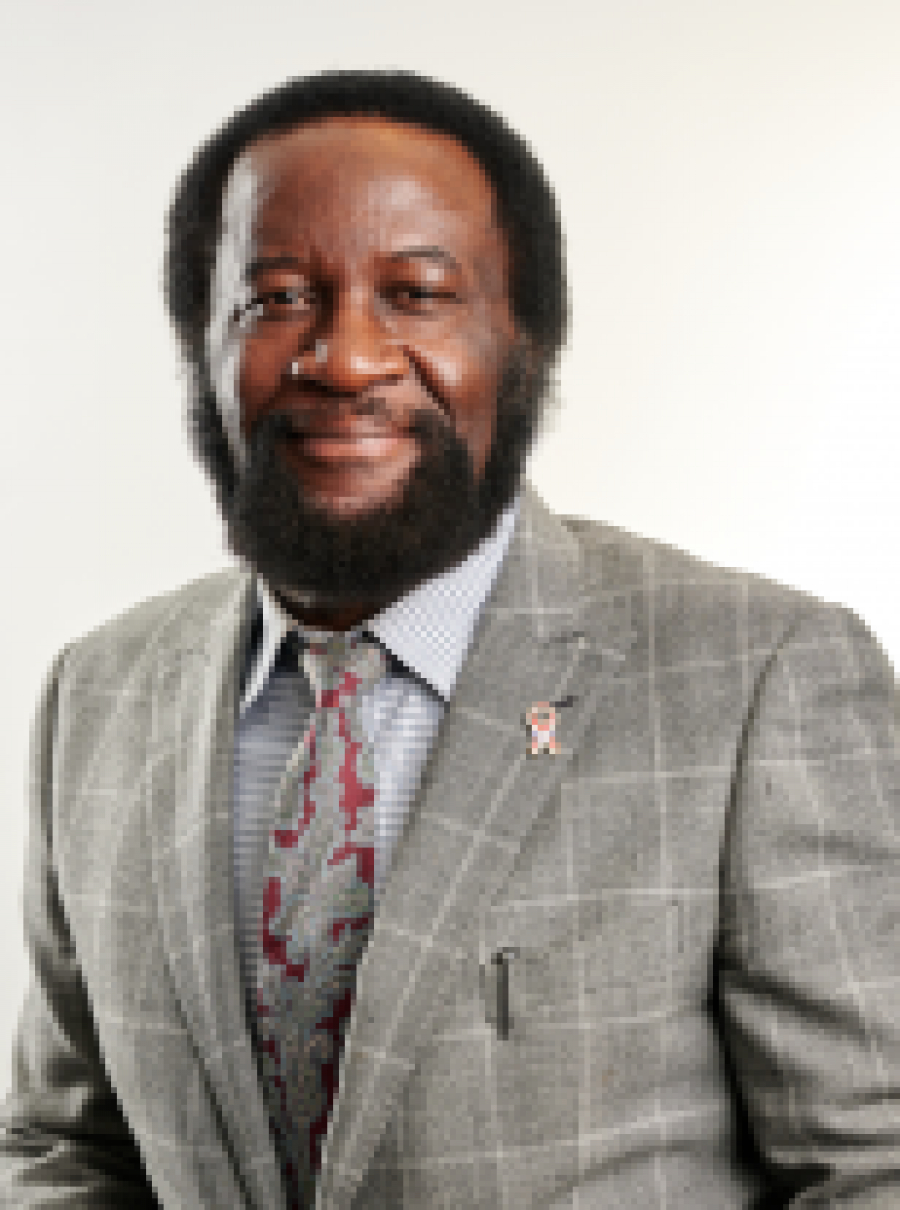
Michael Mbizvo
Senior Associate & Zambia Country Director
Michael Mbizvo is director of the Population Council’s office in Zambia and a senior associate in the Reproductive Health program. Mbizvo provides strategic direction and technical oversight to the Council’s research initiatives to advance reproductive health, including family planning services; HIV prevention, care, and services; gender-based violence and adolescent sexual and reproductive health programs and policies in Zambia.
Kalliopi Mingeirou
UN Women
Kalliope is currently the acting Chief of the Ending Violence against Women Section at UN-Women in New York. She is also leading the work of the section in the area of prevention. She is a lawyer by training, holding an LL.M. on public international law. Before joining UN-Women, Kalliope worked as a practicing lawyer in Greece, and at international level, she worked for UN agencies, as well as international NGOs in the areas of human rights, women’s human rights and refugee protection in several countries, such as in the post-genocide Rwanda, Sweden, Burundi, Morocco, Bosnia Herzegovina, Liberia, Guinea and Ivory Coast.

Professor A K Shiva Kumar
Ashoka University & The Kennedy School of Government at Harvard University
A K Shiva Kumar (Shiv) is a development economist and evaluator who works on issues related to human development including poverty, health, nutrition, basic education, and the rights of women and children. He is Co-Chair of the Know Violence in Childhood – a global learning initiative that is synthesizing evidence to advocate for ending violence. He teaches economics and public policy as a visiting faculty member at Ashoka University, India and Harvard’s Kennedy School of Government. Shiv is an alumnus of Bangalore University and the Indian Institute of Management, Ahmedabad as well as Harvard University from where he did his Masters in Public Administration and Ph.D in Political Economy and Government.

Dr. Claudia Garcia-Moreno
World Health Organization (WHO)
Dr García-Moreno currently leads the team working on violence against women at the World Health Organization (WHO), which includes work on measurement and epidemiology, interventions research and development of guidelines and tools for the health sector. She has led the WHO’s work on gender and women’s health and on violence against women and until 2013 was coordinator of the Gender, Reproductive Rights, Sexual Health and Adolescence team in the Department of Reproductive Health and Research. She coordinated the WHO Multi-Country Study on Women’s Health and Domestic Violence against Women, and is a founder and coordinating group member of the Sexual Violence Research Initiative. She is currently co-chair of the FIGO Working Group on Gender-based Violence and chair of the Independent Advisory Board of the DFID-funded What works to prevent violence against women and girls initiative, and previously a member and chair of the Steering Committee of the Global Coalition on Women and AIDS. Dr García-Moreno is a physician from Mexico with an MSC in Community Medicine from the London School of Hygiene and Tropical Medicine. She has thirty years of experience in health care delivery, sexual and reproductive health, women’s health and gender in health research and policy, including in humanitarian settings.

Tina Musuya
The Center for Domestic Violence Prevention (CEDOVIP)
Tina is the Executive Director at The Center for Domestic Violence Prevention (CEDOVIP), and holds an MA in Sociology from Makerere University. Under her guidance, CEDOVIP won the 2010 UNAIDS Red Ribbon Award for innovative work in preventing violence against women and HIV and also successfully piloted the SASA! Programing in Kampala the site of the ground breaking SASA! study that brought to light evidence that preventing violence against women through social norm change is possible. She led a team of CEDOVIP’s colleagues to roll out community mobilization programs to prevent VAW in more than 13 districts in Uganda. She provided leadership for advocating for legislations on VAW i.e engaged in policy formulation at a local level (influenced the enactment of the first ever Domestic Violence bylaw in Uganda for Kawempe Division) and effectively participated in the drafting of the Domestic Violence Bill and spearheaded the Domestic Violence Bill coalition’s successful advocacy process for the Domestic Violence Act with civil society, policy makers, media and grassroots communities.
She brings 13 years of professional experience focused on VAW programme development and implementation. She has worked with diverse stakeholders, bilateral donor agencies, UN agencies, international and national NGOs, national consultants and leading academic institutions. Tina is a member of the Independent Advisory Board for the DFID-UK ‘What works to prevent violence against women and girls’ global program and a member of the Global Women’s Leadership Council. Tina participated in WithoutViolence Voices from the Field 2014 Fellowship to develop more effective solutions-oriented, evidence-based communications and advocacy strategies that can help broaden and deepen engagement with the issue of violence against children and women.

Markus Goldstein
World Bank
Markus Goldstein is a development economist with experience working in Sub-Saharan Africa, East Asia, and South Asia. He is currently a Lead Economist in the office of the Chief Economist for Africa at the World Bank, where he leads the Africa Gender Innovation Lab. His work centers on issues of gender and economic activity, focusing on agriculture and small scale enterprises. Markus has taught at the London School of Economics, the University of Ghana, Legon, and Georgetown University and published widely in academic journals and books. He holds a PhD from the University of California, Berkeley. Markus is a fellow of BREAD and a co-founder and regular contributor to the Development Impact blog.

In early 2016, I met a group of female sex workers (FSWs) in Bagalkot district in Karnataka, India. The campaign statement for their Orange Day event calling for an end to violence against women in December 2015 was “Violence is not love”. I was curious about what this meant because the women had framed it in the context of intimate relationships with their male partners.
Just a year earlier, the results of a formative study by researchers from the Karnataka Health Promotion Trust among 620 female sex workers (FSWs) in the same district had revealed that 51% of them faced emotional, physical or sexual abuse from their intimate partners. Almost half the FSWs reported humiliation, threat of harm or intimidation, 33% were either kicked, choked, burnt on purpose, forced to engage in humiliating sex acts or threatened with a weapon, and 7% were raped by their partners in the six months prior to the survey.
Tara, one of the FSWs I met, shared the story of a long raised scar on her right arm. On a Friday evening in August 2014, her partner came home to find her with a client. She defended herself when he accused her of cheating: “What will happen if I continue sex work? You don’t earn and give me money. How should I earn my livelihood? I need to eat. What do you expect me to do?” Seething with rage, he kicked and pinned her to the ground with his legs on her chest. The pocketknife meant to slit her neck instead slashed her arm raised in an act of self-protection. Writes Priya Pillai, Independent consultant and former lead - research uptake and partnerships at Strive. Read more of about this article published in the Guardian news here.
The What Works to Prevent Violence Against Women and Girls Global Programme is led by the South African Medical Research Council. You can contact us at the Global Programme by:
1 Soutpansberg Road, Pretoria, Private Bag x385, 0001 Pretoria, South Africa
Contact us directly
General enquiries
To contact the What Works to Prevent Violence Global Programme email: whatworks@mrc.ac.za
Staff
Programme Manager, Tirhani Manganyi: Tirhani.Manganyi@mrc.ac.za
Media enquiries
If you would like to develop a story on Violence Against Women and Girls, and would like information or a comment, email our press agent.
Rebecca Ladbury, Ladbury Communications, rebecca@ladburypr.com
DFID Counter Fraud and Whistleblowing Unit (CFWU)
Email: reportingconcerns@dfid.gov.uk or Tel: +44(0)1355 843747
South African Medical Research Council (SAMRC),
fraudulent activities can be reported at: http://ctn-web-01.mrcad.mrc.ac.za/fraudulentdisclosure
Social Media
 |
 |
 |
 |
The Theory of Change maps out the actions that must be taken to address complex social problems. It defines a programme’s overall goals or vision for change, maps out the different social institutions and levels where change must be promoted, and sets out what actions will be taken to drive and achieve that change.
Behavioural sciences research has shown that interventions are rarely effective in promoting change if they are not theoretically grounded. The What Works to Prevent Violence Against Women and Girls Programme is guided by a clearly defined Theory of Change.
 Download the PDF version here
THEORY OF CHANGE |
||||||||
 |
Fewer women and girls are exposed to gender-based violence
|
|||||||
 |
|
|
|
|
||||
 |
|
|
|
|
||||
 |
|
|
|
|
||||
 |
|
|
|
|
||||
|
|
CAPACITY
|
RESEARCH
|
UPTAKE
|
INNOVATION
|
||||
 |
Build knowledge of social and
economic determinants of VAWG in different settings |
Build the evidence base through
new evaluation research |
Fund new high quality innovative programmers
|
Understand how to strengthen responses
|
build the capacity of stakeholding
primary prevention of VAWG |
Disseminate knowledge
|
Build knowledge of costs of VAWG
prevention and impact of scale up on costs |
Buil VAWG prevention programming
and research expertise |
 |
|
|
|
|
|
|||
|
|
BARRIERS TO INVESTMENT IN PREVENTION
|
BARRIERS TO EFFECTIVE EVALUATION RESEARCH
|
BARRIERS TO DELIVERING PREVENTION AT SCALE
|
|||||
 |
Globally one in three woman and girls experience violence in their lifetime. This is driven by the low status and power of women and girls, patriacal social norms, and social norms that regard the use of violence as acceptable, constructions of masculinity the emphasis control and dominance over women, and high levels of exposure to abuse and emotional trauma. It is exacerbated by poverty, problematic alcohol use and limited political and institutional will to prevent and respond. Despite this evidence, investment VAWG prevention is inadaquate.
|
|||||||
The Global Programme is implemented by a consortium led by the South African Medical Research Council, in partnership with the London School of Hygiene and Tropical Medicine and Social Development Direct.
 The South African Medical Research Council
 is a globally recognised research institute. It is the lead agency for the consortium, responsible for managing the consortium and all aspects of the programme. The South African Medical Research Council brings to the programme 19 years of experience in developing innovative and large-scale research projects on violence against women. It also brings an extensive network of partners, working across the global south, on violence prevention.
 The London School of Hygiene and Tropical Medicine
 is an international leader in public health research. It is responsible for guiding research and work that focuses on the economics, cost-effectiveness and scale-up approaches for prevention programmes. The London School of Hygiene and Tropical Medicine brings to the consortium 18 years of experience in conducting multi-disciplinary research on violence against women, and assessing interventions designed to prevent it. It has been involved with research to assess the impact of public health interventions, and to estimate the costs and cost-effectiveness of different violence against women prevention programmes.
 Social Development Direct
 is the UK’s leading niche provider of expert social development assistance and research services. Social Development Direct’s core expertise is in gender equality, citizen voice and accountability and conflict prevention and peace building. Social Development Direct has a large gender portfolio and works extensively on violence prevention and response. It holds a number of significant contracts in this field which includes the violence against women and girls helpdesk - a DFID-led global service that provides research and short-term technical assistance on the full range of violence issues, and a large-scale multi-city impact evaluation of a violence prevention programme in India.
More...
The Global Programme is implemented by a consortium led by the South African Medical Research Council, in partnership with the London School of Hygiene and Tropical Medicine and Social Development Direct.
The programme:
Conducts cutting-edge research: Prevention efforts that work are based on research and evidence. The Global Programme conducts cutting-edge research around the world that will substantially advance the evidence on what drives violence, what works to prevent violence, what makes interventions successful and how they can be replicated, adapted and scaled up. This includes conducting large-scale impact evaluations of successful and promising prevention interventions, costing studies, and in-depth secondary analysis of existing data.
Supports innovation: Prevention is a growing field, and much new and promising work is being done. The Global Programme supports groundbreaking work through an innovation grant scheme, to support non-profits working in DFID priority countries to develop and test pioneering approaches to preventing violence against women and girls.
Promotes knowledge sharing and builds capacity: A unified movement to prevent violence against women requires sharing lessons globally. To support this, The Global Programme provides a platform for cross-country and cross-disciplinary learning. The programme also provides training and capacity development in primary prevention approaches to research, programme design and implementation.
Drives the policy agenda: Good policy and programming is based on evidence. The Global Programme has strong networks with policymakers, practitioners and activists worldwide, and is committed to communicating research in ways that are applicable to the needs of different stakeholders, to ensure knowledge translates into action.