Evidence HubWhat Works Resources
- You are here:
-
Evidence Hub

- What Works

What Works
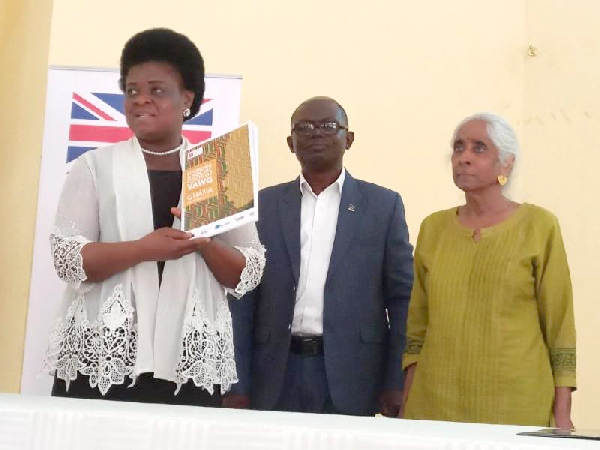

This report provides a summary of the key ndings of the What Works to Prevent Violence: Economic and Social Costs project from Ghana. It also provides an overview of the costs of violence against women and girls (VAWG) to individuals, households, businesses and the economy. Findings show the heavy drag that VAWG imposes on wellbeing and economic productivity, and the need to invest urgently in scaling up efforts to prevent violence.
Economic and Social Costs of Violence Against Women and Girls in Ghana: Country Technical Report

Violence against women and girls (VAWG) is one of the most widespread human rights violations. VAWG is a signi cant social, economic and public health problem. Globally, 35% of women have experienced physical/sexual IPV or non-partner sexual violence in their lives. We know that this violence has implications for women’s health and wellbeing; however, we have less understanding about the impacts of VAWG on communities, businesses, and the national economy. While it has been estimated that violence against women and girls costs the global economy about US$8t, there are few studies, particularly of developing countries, that outline the national-level economic costs of such violence. Similarly, few studies explicitly analyse the social costs of VAWG.

Violence against women and girls (VAWG) is widely recognised as a violation of human rights and a challenge to public health. Further, VAWG is an under-examined, but crucial component of the overall crisis in South Sudan. VAWG has economic and social costs that have not been adequately recognised either in South Sudan or internationally. These costs not only impact individual women and their families but also ripple through society and the economy at large. The impacts of VAWG on economic development has not been adequately investigated, analysed or quantified in South Sudan.

This report presents a short summary of the key findings of the What Works to Prevent Violence: Economic and Social Costs project relating to South Sudan. It is intended to provide an overview of the social and economic costs of violence against women and girls (VAWG) in South Sudan that can be used to deepen understanding, and act as an advocacy tool to encourage investment in efforts to address VAWG.
Pathways From Food Insecurity to Intimate Partner Violence Perpetration Among Peri-Urban Men in South Africa
Hatcher, A. M., Stöckl, H., McBride, R. S., Khumalo, M., & Christofides, N. (2019). Pathways From Food Insecurity to Intimate Partner Violence Perpetration Among Peri-Urban Men in South Africa. American Journal of Preventive Medicine.
Gender role conflict and sexual health and relationship practices amongst young men living in urban informal settlements in South Africa
Closson, K., Hatcher, A., Sikweyiya, Y., Washington, L., Mkhwanazi, S., Jewkes, R., ... & Gibbs, A. (2019). Gender role conflict and sexual health and relationship practices amongst young men living in urban informal settlements in South Africa. Culture, health & sexuality, 1-17.

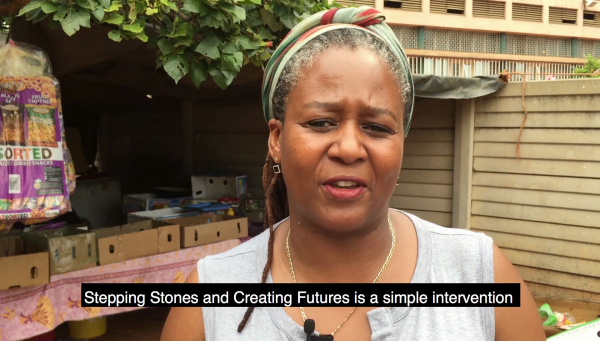
Watch our latest video showcasing the latest evidence from Stepping Stones and Creating Futures, which has seen a reduction in violence in informal settlements in South Africa. Violence against women and girls is preventable.