Evidence HubWhat Works Resources
- You are here:
-
Evidence Hub

- What Works

What Works
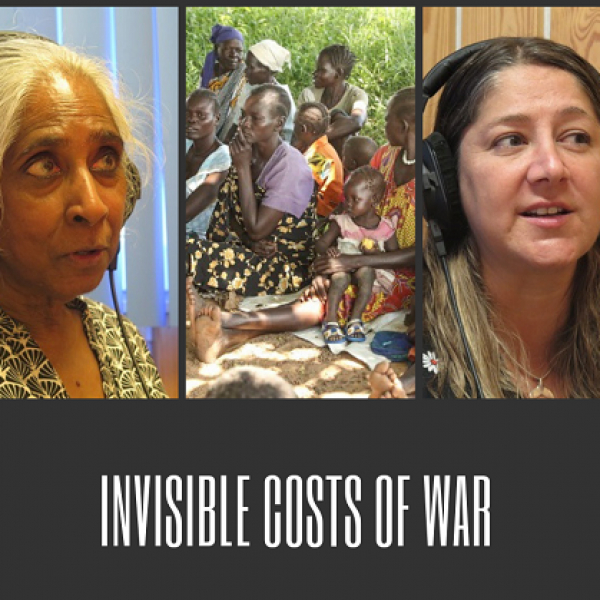
A new report has brought to light the enormous economic and social costs of violence against women and girls in South Sudan.
The report suggests that more than eight million days of productivity have been lost as a result of violence in the past year.
Listent to the podcast on Audioboom here
Alvarado, G., Fenny, A. P., Dakey, S., Mueller, J. L., O’Brien-Milne, L., Crentsil, A. O., ... & Schwenke, C. (2018). The health-related impacts and costs of violence against women and girls on survivors, households and communities in Ghana. Journal of public health in Africa, 9(2).
Javalkar, P., Platt, L., Prakash, R., Beattie, T., Bhattacharjee, P., Thalinja, R., ... & Davey, C. (2019). What determines violence among female sex workers in an intimate partner relationship? Findings from North Karnataka, south India. BMC Public Health, 19(1), 350.
Economic and Social Costs of Violence Against Women and Girls in Pakistan: Country Technical Report

Violence against women and girls (VAWG) is widely recognised as a violation of human rights and a challenge to public health. VAWG also has economic and social costs that have not been adequately recognised. These costs not only impact individual women and their families but ripple through society and the economy at large. The threat VAWG poses to the social fabric of the country and its impacts on economic development have not been adequately investigated, analysed or quantified in Pakistan.
A study on capacity development in the “What Works to Prevent Violence Against Women” programme
Willan, S., Kerr-Wilson, A., Parke, A., & Gibbs, A. (2019). A study on capacity development in the “What Works to Prevent Violence Against Women” programme. Development in Practice, 1-12. doi:10.1080/09614524.2019.1615410
Addo-Lartey, A., Ogum Alangea, D., Sikweyiya, Y., Chirwa, E., Coker-Appiah, D., Jewkes, R. and Adanu, R. (2019). Rural response system to prevent violence against women: methodology for a community randomised controlled trial in the central region of Ghana. Global Health Action, 12(1), p.1612604.
Cash Transfers in Raqqa Governorate, Syria
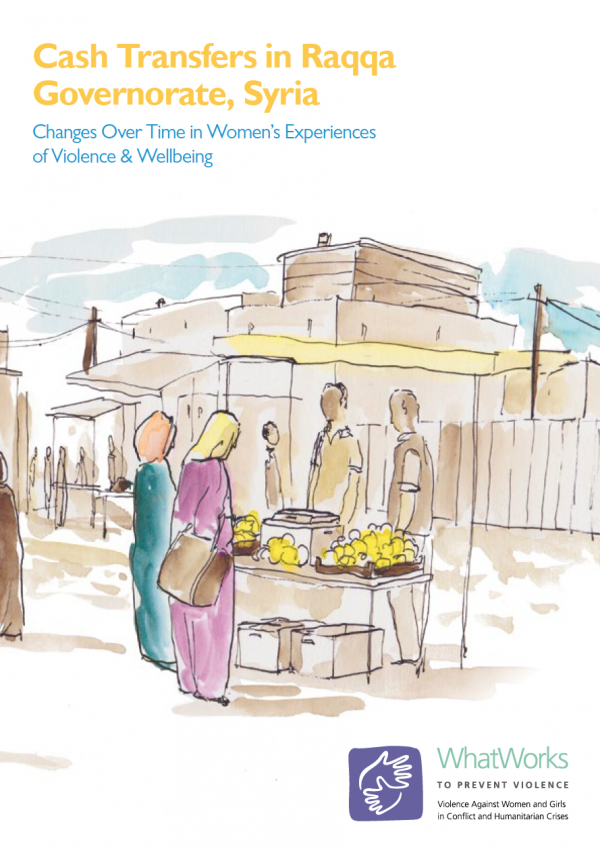
Changes Over Time in Women’s Experiences of Violence & Wellbeing
Cash and voucher assistance (CVA) has quickly become one of most widely used modalities of aid in humanitarian crises. In humanitarian contexts, cash assistance has been shown to have significant positive impacts on food security and basic needs for households, helping them to withstand conflict-related economic shocks and market fluctuations, and reducing their reliance on negative coping.
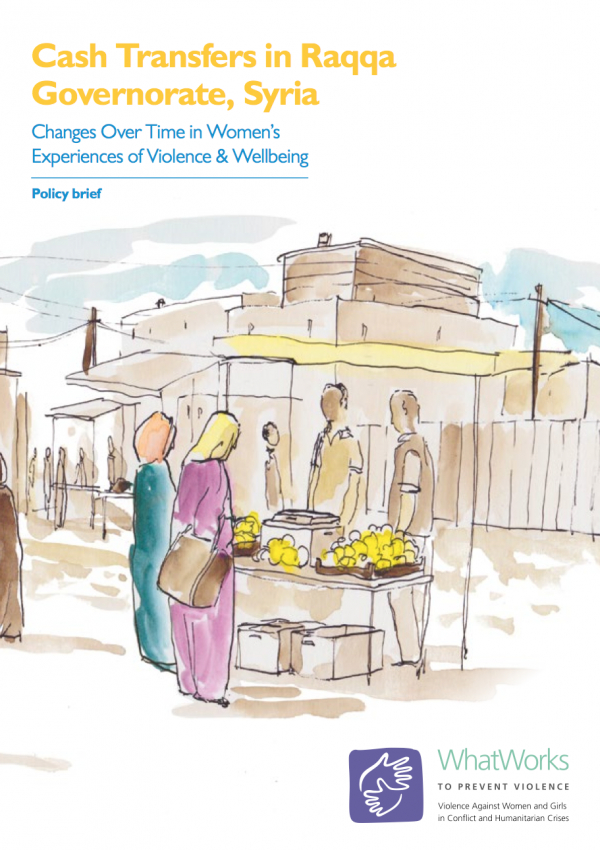
Humanitarian cash transfer programming has become one of the most widely used modalities of aid in humanitarian crises. This International Rescue Committee (IRC) study is among the first to explore the potential impact that cash transfer programming may have on violence against women and girls (VAWG) in acute settings. In conflict and emergency settings, women and girls are vulnerable to increased violence, exploitation, and harm to their physical and mental health.

This report summarises the key findings of the What Works to Prevent Violence: Economic and Social Costs project relating to Pakistan. It provides an overview of the social and economic costs of violence against women and girls (VAWG) to individuals and households, businesses and communities, and the national economy and society. Findings show the heavy drag that VAWG imposes on economic productivity and wellbeing, and the need to invest urgently in scaling up efforts to prevent violence.