Evidence HubWhat Works Resources
- You are here:
-
Evidence Hub

- What Works

What Works
Evaluation of Zindagii Shoista (Living with Dignity), an intervention to prevent violence against women in Tajikistan: impact after 30 months

This report outlines the medium-term impacts of Zindagii Shoista (Living with Dignity) – a project to prevent violence against women and girls (VAWG) in Tajikistan – by determining levels of violence and measuring socioeconomic and emotional wellbeing indicators 15 months after the project ended – 30 months after its commencement. At the endline of the intervention, VAWG levels had dropped by 50%, and relationship and gender equality indicators had improved. Significant positive changes were seen for all socioeconomic status indicators as well as significant positive changes for all health measures, including depression scale and suicidality.

Ogum-Alangea, D., Addo-Lartey, A., Chirwa, E., Sikweyiya, Y., Coker-Appiah, D., Jewkes, R., & Adanu, R. (2019). Evaluation of the Rural Response System (RRS) to Prevent Violence Against Women and Girls in Ghana.
Component 2 collaboration with UN Women’s Virtual Knowledge Centre to End Violence against Women and Girls
UN Women’s Virtual Knowledge Centre to End Violence against Women and Girls was launched in 2010 to encourage and support evidence-based programming to more efficiently and effectively design, implement, monitor, and evaluate initiatives to prevent and respond to violence against women and girls. Under Component 2 of the What Works programme, the Global Women’s Institute (GWI) has developed guidance on Researching, Monitoring and Evaluation as part of the site’s Conflict/Post-Conflict module. Available in English, French, and Spanish, this chapter covers best practices on how to research VAWG in conflict and humanitarian settings based on lessons learned during What Works and from other work that GWI has coordinated in the development and adaptation of methodological approaches to collect data in this field.
December newsletter out now
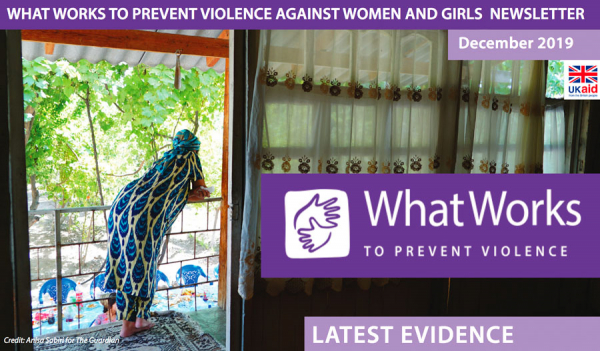
Don’t miss the penultimate newsletter from What Works. After six years of rigorous implementation and evaluation, the global What Works to Prevent Violence against Women and Girls programme is drawing to a close.The programme has produced a wealth of resources (peer reviewed publications, reports and briefs) which can be found online here. We will be publishing one more newsletter in March 2020 to coincide with a series of end line events and to launch the programme’s two agship synthesis reports. Please continue to stay updated on our work, and schedule of events, via the What Works website and social media channels. View the December newsletter here...
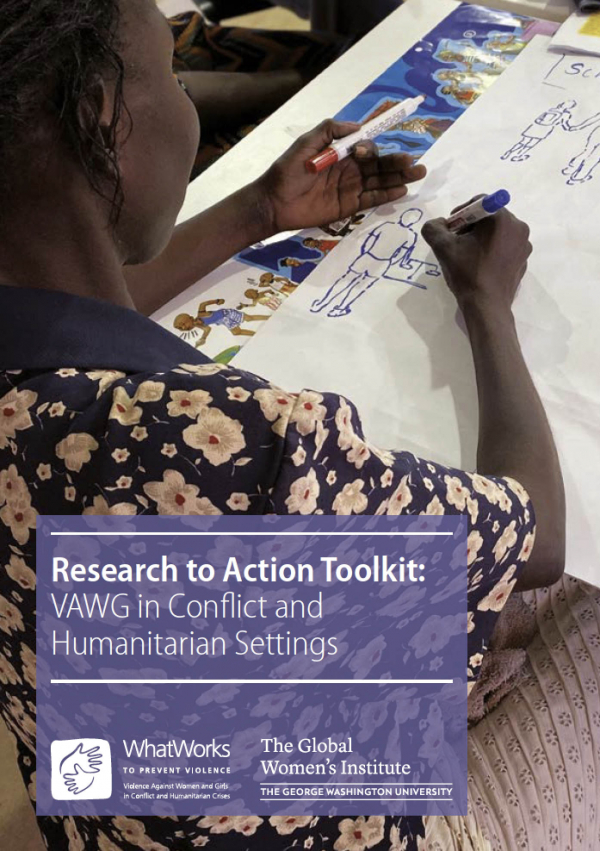
In order to bridge the gap between research and action, the Global Women’s Institute (GWI) has developed this new toolkit to support non-academic stakeholders to understand and interpret the data gathered through population-based research on VAWG and to create a process for moving from evidence to implementing action. The Research to Action tool provides a step-by-step process for practitioners and policymakers to better understand and utilise data generated by VAWG research activities.
In order to bridge the gap between research and action, the Global Women’s Institute (GWI) has developed this new toolkit to support non-academic stakeholders to understand and interpret the data gathered through population-based research on VAWG and to create a process for moving from evidence to implementing action. The Research to Action tool provides a step-by-step process for practitioners and policymakers to better understand and utilise data generated by VAWG research activities.
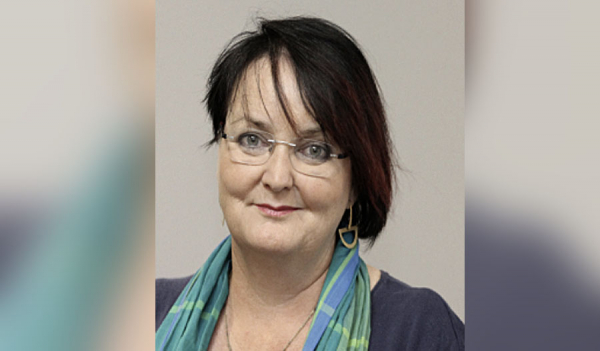
Rose Wilcher, co-chair of the Interagency Gender Working Group’s Gender-Based Violence Task Force, recently spoke with Rachel Jewkes, Consortium Director of the What Works to Prevent Violence Against Women and Girls Global Programme. What Works, a program funded by the United Kingdom’s Department for International Development (DFID) from December 2013 through March 2020, worked in 13 countries across Africa and Asia to build the evidence base on drivers of violence against women and girls (VAWG) and what works to prevent VAWG. This interview has been edited for length and clarity.
Rose: What did the What Works initiative set out to accomplish when it started five years ago?
Rachel: What Works was set up by DFID to drive forward the agenda of prevention of VAWG. It recognized that if we are to meet the goal of preventing VAWG, we need to do more than respond to incidents of violence and support survivors, even though both are incredibly important. There was enough emerging evidence in the field that some prevention interventions were promising in the experimental settings where they were developed and tested, but there was a need for far more evidence. So, DFID set out to fund a program to support innovation, evaluation of innovative programs, and evaluation of programs that have been implemented but have not been rigorously evaluated.

Globally, activists and researchers have pointed to the contribution of harmful alcohol and substance use conditions to the occurrence and severity of intimate partner violence (IPV). There has been much debate over the relationship and whether it is truly causal. To date, there has been limited evidence about whether interventions to prevent harmful alcohol use and treat common mental health problems have an impact on IPV outcomes, and whether gender-transformative interventions that seek to prevent IPV can reduce harmful alcohol use and improve mental health. Available evidence on these associations has largely been from the global North. DFID’s What Works to Prevent Violence Against Women and Girls Global programme (What Works) has generated new evidence on these associations from evaluations of IPV prevention interventions in a range of settings in the global South, including peri-urban Zambia, rural Rwanda and Ghana, and urban informal settlements in South Africa, with promising findings for IPV prevention.
What Works backs Generation Equality and the UN’s theme for 2019 to stand against rape reinforcing the message that violence is preventable.
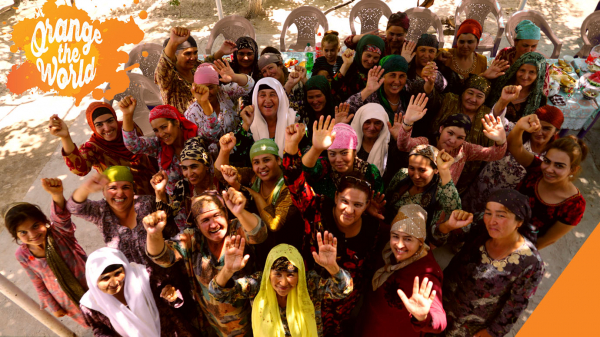
Our programme has been investing in primary prevention efforts across Africa and Asia for the last six years, efforts that seek to understand and address the underlying causes of violence, effective interventions to prevent it and evidence on the costs of VAWG. One in three women globally experience violence at the hands of a man and in some of the communities where What Works worked, rates were closer to two in three. In South Sudan, up to 73% of women experienced violence in their lifetimes. In the DRC, almost 70% of women experienced violence from a partner in the past 12 months. In South Africa, 60% of men perpetrated violence against women in the past year. In all these countries violence has become a normal part of life.
The What Works programme saw recurring themes and lessons emerge from the research. What Works discovered that the key drivers of VAWG are mutually reinforcing, enhancing their potency, that the main drivers include; patriarchal social norms, practices and institutions, exposure to violence in childhood, poverty, limited education for girls, and partner alcohol and drug use and poor mental health. The programme learned that there are very specific elements which led to interventions working; for example; those that were rooted in knowledge of the local context, that understood the multiple drivers, that worked with men as well as women, and where relevant, the whole family, those that offered supportive engagement with couples experiencing violence, were age-appropriate, and were long enough.
A programme in rural Rwanda, which worked with couples and community activists to challenge the social acceptance of violence and provide safe spaces for survivors, saw relationships improve, reduced depression for men and women, and resulted in more equitable household decision-making – this is just one of the 15 What Works projects that have shown that violence is preventable. In Tajikistan, a project combining economic empowerment with training on gender reduced intimate partner violence by 50%. In Ghana, community activist approaches to shift harmful norms led to a 55% reduction in sexual partner violence. In the DRC, a project mobilising faith leaders and community activists saw a five-fold reduction in non-partner sexual violence. In Pakistan, sports-based and play curricula in schools achieved significant reductions in corporal punishment and peer violence for girls and boys. And in Zambia, a cognitive behavioural treatment approach led to a 53% reduction in physical IPV and a 56% reduction in sexual IPV.
This rigorous evidence shows that abuse is not inevitable, that norms can, do and must change that violence is preventable. So we absolutely support the UNiTE's Generation Equality campaign to support broader advocacy for gender equality with its specific lens on preventing and ending violence against women and girls.
Intimate partner violence in Nepal: Change Starts at Home study

Intimate partner violence (IPV) is a significant and pervasive health and human rights issue for women around the world; one in three women experience physical and/or sexual violence at the hands of a partner within their lifetime. A similar proportion of women is affected in Nepal.1-3 Nationally, 11.2% of women who have ever been married report having experienced physical and/or sexual violence in the past 12 months. In rural Nepal, where gendered norms around dominance, aggression and sexual rights of husbands over their wives are entrenched; over half of young married women report violence from an intimate partner in their lifetime.4
The Change study took place in the Terai region which has rates of IPV that are higher than the national average.5 Approximately one quarter of the 1,800 women surveyed in the Change baseline study had experienced IPV in the past 12 months, with 18% reporting sexual IPV and 16% reporting physical IPV.