The projects, selected in conjunction with the Medical Research Council South Africa, will implement and test cutting-edge interventions that aim to fundamentally advance approaches to stopping violence before it starts. The programme will also conduct rigorous evaluations of promising existing programmes to assess how they can be taken to scale.
Evidence HubWhat Works Resources
- You are here:
-
Evidence Hub

- What Works

What Works
New £1.5 million project to focus on economic and social costs of violence against women and girls
A new research project announced today (11 February) is to investigate the social and economic costs of violence against women and girls in developing countries. Led by Dr Nata Duvvury of the National University of Ireland Galway, and funded by the UK’s Department for International Development, the project will give policy-makers ways of estimating the social and economic costs of violence to national economies.
Tagged under
21 June 2016
Putting Violence Against Women at the Centre of the Agenda for Women’s Economic Empowerment
At last it seems the world is recognising that economies built on a foundation of patriarchy are inefficient as well as unequal and unjust. As the 60th Commission on the Status of Women opens in New York this week, a series of promising global initiatives are underway to address women’s systematic exclusion from economic advancement. This calls for celebration – but some careful warnings too.
Tagged under

NAIROBI (Thomson Reuters Foundation) - The schoolboy watched as a man tried to remove the nappy of a little girl he was dragging along a Nairobi riverbank, suspecting that he was going to rape her.
Having been trained to defend girls against sexual assault, the boy called other young men to help him confront the man and rescue the child.
Tagged under
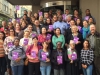
Technical leads from the Global Programme consortium partners met with researchers and managers from the What Works grantees, to set into motion the process of learning and working together.
The Induction Meeting, held in Istanbul in January provided grantees with an introduction to best practices toward designing and implementing prevention research and projects, from globally recognised leaders in the field.
Tagged under
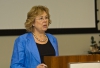
Baroness Lindsay Northover, Parliamentary Under Secretary of State for International Development writes: I was delighted to launch DFID’s flagship global programme of £25 million for ground-breaking research to identify what really works in preventing violence. Speaking at the South African Medical Research Council, who will undertake the research, it was clear that this information will fill vital gaps in the evidence, including around the role of men and boys.
Tagged under
In recent years, attention has turned to engaging men and boys rather than talking to women about how to avoid violence. Now The UN’s high-profile He For She campaign is just one example of the projects emerging that call on all men – not just those who are violent – to be part of the solution. They are asked to stand in solidarity with women and make equality one of their own personal missions.
Tagged under
10 December 2014
UK supports new innovative global research to prevent violence against women and girls
Britain will fund 18 ground breaking research programmes to help prevent violence against women and girls as part of the Department for International Development’s What Works to Prevent Violence Against Women and Girls Programme.
Tagged under
10 December 2014
UK supports new innovative global research to prevent violence against women and girls
Britain will fund 18 ground breaking research programmes to help prevent violence against women and girls as part of the Department for International Development’s What Works to Prevent Violence Against Women and Girls Programme.
The projects, selected in conjunction with the Medical Research Council South Africa, will implement and test cutting-edge interventions that aim to fundamentally advance approaches to stopping violence before it starts. The programme will also conduct rigorous evaluations of promising existing programmes to assess how they can be taken to scale.
The projects supported through the What Works Programme, include:
- One Man Can and Creating Futures in South Africa, which will engage men and boys to challenge traditional models of manhood
- Business for Social Responsibility, which aims to end sexual harassment in the workplace for women working in the garment sector in Bangladesh; and
- Ujamaa Africa, which will focus on economic empowerment combined with self-defence programmes in Kenya for adolescents to prevent sexual assault.
Overall the grants will support projects in 16 countries from Afghanistan to Zambia.
International Development Minister, Baroness Northover said:
“Violence against women and girls is a global epidemic. Though some societies have made more progress than others, we must all work together to end it.
“These are really exciting projects and thanks to the boost from UK funding they will help improve the lives of women and girls in some of the poorest countries.”
Rachel Jewkes, Medical Research Council SA and lead of the What Works To Prevent Violence Against Women Global Programme said:
“We know there are a lot of gaps in the evidence and data on issues relating to violence against women and girls, not least because of the sensitive nature of the research and data collection.
“We are delighted today to be announcing the recipients of our innovation and research grants, as we mark the end of the 16 days of activism, and look forward to finding out what works to prevent violence against women and girls in the coming years.”
The grants were unveiled at an event hosted by the Medical Research Council SA on 10 December attended by International Development Minister, Baroness Northover as well as the What Works Independent Advisory Committee.
For individual grantee background, comments and images contact:
Rebecca Ladbury, rebecca@ladburypr.com
Tagged under
05 December 2014
The Lancet: Worldwide action needed to address hidden crisis of violence against women and girls
Current efforts to prevent violence against women and girls are inadequate, according to a new Series published in The Lancet. Estimates suggest that globally, 1 in 3 women has experienced either physical or sexual violence from their partner, and that 7% of women will experience sexual assault by a non-‐partner at some point in their lives.
Yet, despite increased global attention to violence perpetrated against women and girls, and recent advances in knowledge about how to tackle these abuses (Paper 1, Paper 3), levels of violence against women – including intimate partner violence, rape, female genital mutilation, trafficking, and forced marriages – remain unacceptably high, with serious consequences for victims’ physical and mental health. Conflict and other humanitarian crises may exacerbate ongoing violence.
Tagged under
03 December 2014
Stepping Stones and Creating Futures
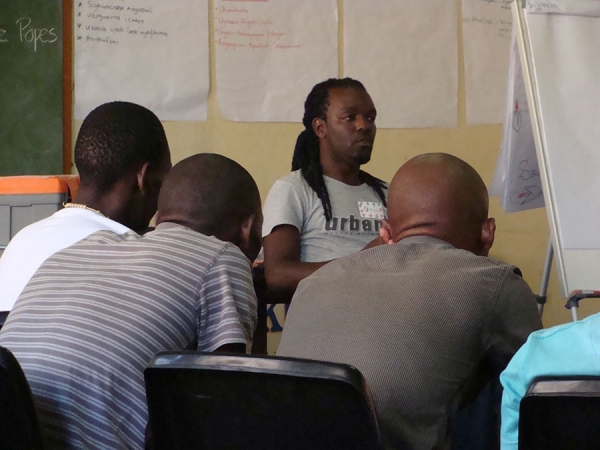
South Africa | Project Empower
Stepping Stones and Creating Futures aims to reduce rates of intimate partner violence in urban areas in South Africa. The programme runs peer-to-peer training sessions with 18-24 year olds. In these sessions participants develop livelihoods strategies and are involved in discussions, role plays, dramas and games that encourage participants to reflect on social norms around gender and the use of violence.
Tagged under