Evidence HubWhat Works Resources
- You are here:
-
Evidence Hub

- What Works

What Works
Samvedana Plus: Reducing violence and increasing condom use in the intimate partnerships of female sex workers

India | Karnataka Health Promotion Trust
Samdevena Plus is a multi-level intervention that aims to reduce vulnerability to HIV amongst female sex workers in Karnataka State, India, by reducing partner violence and increasing consistent condom use within their intimate relationships. The Global Programme, in partnership with the Karnataka Health Promotion Trust and STRIVE will evaluate the programme using a Cluster-Randomised Control Trial.
One Community One Family

Nepal | VSO International
The One Community One Family project addresses factors related to migration in Nepal including the changing roles and identities of men and women in migrant communities that are seen to be driving a rise in VAWG. The project will provide migrant women with livelihood training and link them to microfinance institutions, and will work with the wider community to provide counseling, access to support services, and drive local advocacy activities.

Kenya | Ujamaa Africa
Ujamaa Africa will work in partnership with government ministries, UN agencies and civil society organisations in Kenya to implement a project that aims to reduce rates of sexual violence, by developing a schools-based programme to address the factors that can lead to violence early on. The project also includes a randomized control trial to test the intervention.
Engaging with Faith Groups to Prevent Violence Against Women and Girls in Conflict-affected Communities
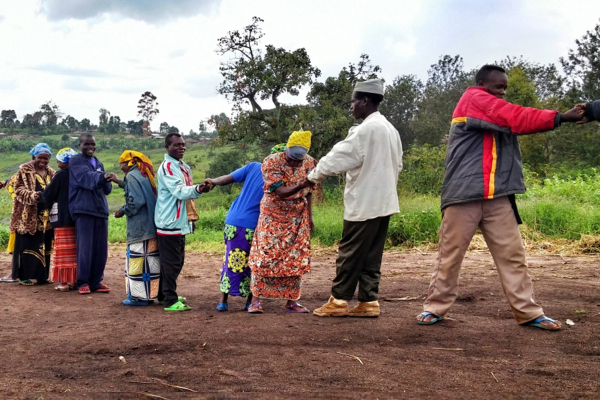
Democratic Republic of Congo | Tearfund
The project focuses on primary prevention of violence against women and girls (VAWG), particularly sexual violence, in 20 conflict-affected communities in Democratic Republic of Congo (DRC). The project will engage and equip faith leaders to speak out against VAWG and act as catalysts to address the root causes of violence within their local communities.
One Man Can – Preventing Men’s Use of Violence in Southern Africa
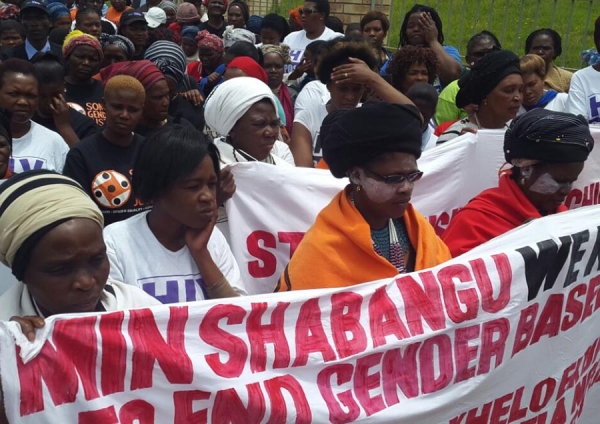
South Africa | Sonke Gender Justice
This project will refine and test a multi-level model for reducing violence against women and girls (VAWG) in urban South Africa using a cluster randomised controlled trial design. It will expand a gender-transformative programme called One Man Can (OMC) by adding community mobilisation and advocacy, and more squarely focus on preventing violence against women and girls.
No More Violence: A Gender-relational Approach to Building Community Resilience and Responses to Violence Against Women and Girls

Tajikistan | International Alert
International Alert will work with Tajik NGO partners to build a multi-component project to address underlying factors that condone and contribute to domestic violence in Tajikistan. The project will work to develop economic and business opportunities for women, but will also work with the wider community, including men and influential community institutions to begin wider conversations to shift social norms and gender stereotypes that contribute to an environment that condones violence against women and girls.
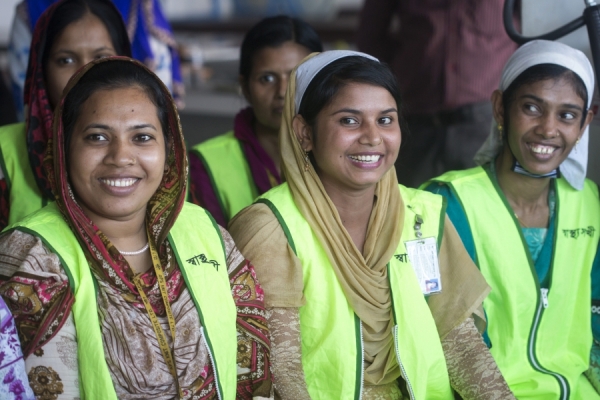
Bangladesh | BSR (Business for Social Responsibility)
In order to address violence against women and harassment in the workplace, HERrespect will link international buyers and their supplier factories in Bangladesh, with local NGOs, to run workplace training sessions on gender, sexual and reproductive health and rights. This is an exciting project because of its potential for scaling up and impacting upon thousands of women in the garment industry in Bangladesh and beyond. This programme aims to develop a new approach on how workplaces can be transformed to recognise gender equality as a business priority.

Nepal | Equal Access Nepal
Change Starts at Home uses media (radio and SMS) and community mobilization to prevent IPV against women and girls in Nepal. Centred around an innovative radio programme and weekly listener group meetings, the intervention will target married couples, family members and community leaders across Nepal, addressing social norms, attitudes and behaviours that perpetuate women and girls low status. The impact of the project will be rigorously evaluated using a Randomised Control Trial to examine potential pathways of change and over the 3 years, Equal Access hopes to identify intervention activities that are effective, replicable and scalable so that a change in the status of women and girls in Nepal can be sustained over time
What Works launch at the Global Summit to End Sexual Violence in Conflict in London
The then Parliamentary Under Secretary of State for International Development, the Rt. Hon. Lynne Featherstone, launched What Works to a packed room at the Global Summit to End Sexual Violence in Conflict on June 11.
Speakers had to be set up outside the main auditorium, to accommodate the level of interest from policymakers who were willing to stand in order to learn more about the DFID flagship programme. The launch and involvement with the Global Summit received great press with the key message that violence is preventable.
Media highlights:
- It is #TimeToAct but what do we do? | Dr. Emma Fulu’s blog on The Huffington Post: http://www.huffingtonpost.co.uk/emma-fulu/timetoact_b_5477855.html
- We Must Stop Violence Before It Starts | The Rt. Hon Lynne Featherstone’s article on DFID’s blog: https://dfid.blog.gov.uk/2014/06/11/we-must-stop-violence-before-it-starts/
- Sexual Violence in Conflict | Special focus in The Lancet including pieces from Professor Rachel Jewkes and the Global Programme’s consortium representative from the London School of Health and Tropical Medicine, Charlotte Watts:
- http://genderviolence.lshtm.ac.uk/home-page-articles/lancet-special-focus-sexual-violence-conflict/
What Works to Prevent Violence Against Women and Girls, a global research and innovation programme to help prevent violence against women and girls was launched in South Africa today by UK International Development Minister, Baroness Northover.
The What Works to Prevent Violence Against Women and Girls programme will build knowledge on which interventions work to strengthen women and girls ability to protect themselves from violence. The research will provide high quality and rigorous evidence that can be used by civil society organisations, multilateral agencies, governments and academics to develop programmes that will contribute to eliminating gender based violence.
The launch in South Africa, hosted by the Medical Research Council, who lead the consortium responsible for implementing the £25 million programme globally, coincided with the International Day for the Elimination of Violence Against Women & Girls.
Baroness Northover said:
“The lives of millions of women and girls are scarred by the effects of violence, with 1 in 3 women beaten or sexually abused in her lifetime. The UK is leading efforts to tackle this violence, and is using the What Works programme to gather vital evidence about what actions make a real difference to people’s lives. In generating this research, we can help women and girls protect themselves and create safer and more prosperous communities.”
Rachel Jewkes, Medical Research Council SA:
“We know there are a lot of gaps in the evidence and data on issues relating to violence against women and girls, not least because of the sensitive nature of the research and data collection. We are thinking through how to better understand what works, and how to measure change so that we can direct our efforts towards the most effective interventions out there which deliver results at scale. We are looking forward to announcing the recipients of our innovation grants, at the end of the 16 days of activism, on Wednesday 10 December 2014, which are funding cutting edge interventions to prevent violence in Asia, Africa and the Middle East.”
The What Works To Prevent Violence Against Women and Girls programme has three core components. The first component, the global programme, is managed by the Medical Research Council testing new approaches to stop violence before it starts in Africa, Asia and the Middle East, and asks how to stop the intergenerational cycle of violence and how the underlying social norms that drive violence be addressed.
The second component focuses on violence against women and girls in conflict and humanitarian emergencies. This research programme is managed by a consortium led by the International Rescue Committee and is moving forward with important studies in a number of conflict and emergency contexts including DRC, South Sudan, Dadaab in Kenya and Yemen.
The third component of the programme focuses on the economic and social costs of VAWG, estimated in some countries to be 1 – 2% of gross domestic product each year.