Evidence HubWhat Works Resources
- You are here:
-
Evidence Hub

- What Works

What Works
Research Studies
Six research studies are being conducted to produce rigorous research and evidence on:
VAWG prevalence in South Sudan: a mixed-methods study on the prevalence, forms, patterns and drivers of VAWG in South Sudan;
Kenya refugee camp case management: an assessment of the comprehensive case management model using a task-sharing approach with refugee community workers in the refugee camps of Dadaab;
GBV response post Typhoon Haiyan: a study on how the humanitarian sector met women and girl’s needs in the response to Typhoon Haiyan in the Philippines, including the effectiveness of deployed GBV experts;
Impact of cash transfers on women’s protection and empowerment: an evaluation of the impact of cash transfer programming on women’s empowerment and protection outcomes in acute emergencies (future emergency to be determined);
Statebuilding and peacebuilding: an assessment of how different forms of VAWG and the drivers of VAWG have been addressed by national actors in statebuilding and peacebuilding processes; and also exploring how VAWG affects these processes;
Secondary analysis on the impact of Village Savings and Loans Associations in the Democratic Republic of Congo (DRC): a study on what factors moderated the effectiveness of a group based savings program on the mental health, experiences of stigma, and economic status of a survivor of sexual violence in the DRC.
Global research advisory group
A Global Research Advisory Group (GRAG) was established to bring a broad and expert oversight to Component 2’s research portfolio. Composed of renowned researchers, practitioners and policy makers in the area of violence against women and girls in conflict and humanitarian emergencies, our GRAG members provide expert review on the design and implementation of our six studies as well as analysis and dissemination of findings.
Our current GRAG members are:
Dr Claudia Garcia-Moreno: specialist on gender-based violence (Department of Reproductive Health and Research, WHO)
Dr Jennifer Leaning: expert in public health and rights-based responses to humanitarian crises (Director of the Harvard François-Xavier Bagnoud Center for Health and Human Rights at Harvard University)
Ms Judy El-Bushra: independent consultant specialising on issues of gender, conflict and peacebuilding
Ms Mendy Marsh: Specialist on GBV in Emergencies, UNICEF
Consortium members and research partners
This component is an international multi-disciplinary partnership led by the International Rescue Committee (IRC), with George Washington University’s Global Women’s Institute (GWU, GWI) and CARE International UK (CIUK).
 The International Rescue Committee (IRC)
The International Rescue Committee(IRC) responds to the world’s worst humanitarian crises and helps people to survive and rebuild their lives. Over the past 17 years, the IRC has pioneered programmes that prevent and respond to VAWG, especially in emergencies and crisis, making the IRC a global leader in this field. Today, the IRC manages programmes targeting VAWG in 26 countries in Africa, Asia, and the Middle East, helping restore the dignity of survivors, creating economic opportunities for women and girls to rebuild and transform their lives, and tackling the root causes of violence.
 CARE International UK (CIUK)
CARE International is one of the world’s leading humanitarian and development organisations. It provides life-saving assistancewhen disaster strikes, and helps people rebuild their lives afterwards. It works alongside poor people and communities on long-term programmesto deliver lasting change. Its programmes and policy work tackle the underlying causes of poverty so that people can become self-sufficient. CARE places special focus on empowering women and girlsbecause, equipped with the proper resources, women have the power to lift whole families and communities out of poverty. It also works with communities to prevent and respond to gender based violence and to improve protection measures for women and girls.
 The Global Women’s Institute (GWI), The George Washington University (GWU)
GWI was launched in the fall of 2012 as a university-wide initiative to advance gender equality through interdisciplinary research, education, and civic engagement. GWI leads and supports projects that will make a difference in the lives of women at home and around the world by promoting research that strengthens the global knowledge base on gender, investing in education that prepares the next generation of leaders, and advocating for civic engagement to influence policymakers and raise awareness of women’s issues.
 The London School of Hygiene & Tropical Medicine (LSHTM)
LSHTM is a world-leading centre for research and postgraduate education in public and global health. The School's mission is to improve health and health equity in the UK and worldwide; working in partnership to achieve excellence in public and global health research, education and translation of knowledge into policy and practice. The Gender Violence & Health Centre is a multi-disciplinary research team which works with partners around the world to conduct action-oriented research to better understand the extent, causes and consequences of interpersonal violence, and to identify how prevention and health service programmes can reduce violence in order to improve public health and well-being.
 Africa Population Health Research Centre (APHRC)
APHRC is a leading pan-African research institution headquartered in Nairobi, Kenya, that conducts high quality policy-relevant research on population, health, education, urbsanisation and related development issues across Africa. APHRC actively engages policymakers and other key stakeholders to achieve measurable policy impacts and ensure decision making across the continent is informed by rigorous evidence-based research. APHRC is also committed to developing the next generation of globally competitive African scholars and leads by example through numerous research capacity strengthening initiatives and strong partnerships with top African universities and research institutions.
 Forcier Consulting
 was founded in response to the overwhelming demand for data, research and information in some of the most challenging environments in Africa. It aims to produce reliable and high-quality research in these complex settings, while also make long-term investments in building the capacity of national staff to serve as researchers and consultants. Through this approach, not only does the organisation ensure that today's decision-makers are able to create evidence-based policies and programmes, but it also establishes a research legacy and sustainable technical services industry within the country.
This component of the What Works programme is building evidence on how to prevent and respond to violence against women and girls (VAWG) in conflict and humanitarian settings.
There is growing recognition of the scale and scope of violence against women and girls in these settings. However, existing rigorous evidence is limited, holding back the humanitarian community from implementing the most effective prevention and response strategies.
Six research studies are being conducted to produce rigorous research and evidence on:
- the prevalence, forms, trends, and drivers of VAWG
- effective VAWG prevention and response in conflict and humanitarian settings
- how to carry out safe, ethical, and rigorous research in conflict and humanitarian settings
In addition, the programme is building the capacity of researchers and practitioners in VAWG research methods and practices, and engaging key stakeholders in research uptake, to ensure that evidence is available to and utilised by policy makers, service providers and programme practitioners.
Contact Us
The What Works to Prevent Violence Against Women and Girls Global Programme is led by the South African Medical Research Council. You can contact us at the Global Programme by:
1 Soutpansberg Road, Pretoria, Private Bag x385, 0001 Pretoria, South Africa
Contact us directly
General enquiries
To contact the What Works to Prevent Violence Global Programme email: whatworks@mrc.ac.za
Staff
Programme Manager, Tirhani Manganyi: Tirhani.Manganyi@mrc.ac.za
Media enquiries
If you would like to develop a story on Violence Against Women and Girls, and would like information or a comment, email our press agent.
Rebecca Ladbury, Ladbury Communications, rebecca@ladburypr.com
DFID Counter Fraud and Whistleblowing Unit (CFWU)
Email: reportingconcerns@dfid.gov.uk or Tel: +44(0)1355 843747
South African Medical Research Council (SAMRC),
fraudulent activities can be reported at: http://ctn-web-01.mrcad.mrc.ac.za/fraudulentdisclosure
Social Media
 |
 |
 |
 |
Approach to creating lasting change
The Theory of Change maps out the actions that must be taken to address complex social problems. It defines a programme’s overall goals or vision for change, maps out the different social institutions and levels where change must be promoted, and sets out what actions will be taken to drive and achieve that change.
Behavioural sciences research has shown that interventions are rarely effective in promoting change if they are not theoretically grounded. The What Works to Prevent Violence Against Women and Girls Programme is guided by a clearly defined Theory of Change.
 Download the PDF version here
THEORY OF CHANGE |
||||||||
 |
Fewer women and girls are exposed to gender-based violence
|
|||||||
 |
|
|
|
|
||||
 |
|
|
|
|
||||
 |
|
|
|
|
||||
 |
|
|
|
|
||||
|
|
CAPACITY
|
RESEARCH
|
UPTAKE
|
INNOVATION
|
||||
 |
Build knowledge of social and
economic determinants of VAWG in different settings |
Build the evidence base through
new evaluation research |
Fund new high quality innovative programmers
|
Understand how to strengthen responses
|
build the capacity of stakeholding
primary prevention of VAWG |
Disseminate knowledge
|
Build knowledge of costs of VAWG
prevention and impact of scale up on costs |
Buil VAWG prevention programming
and research expertise |
 |
|
|
|
|
|
|||
|
|
BARRIERS TO INVESTMENT IN PREVENTION
|
BARRIERS TO EFFECTIVE EVALUATION RESEARCH
|
BARRIERS TO DELIVERING PREVENTION AT SCALE
|
|||||
 |
Globally one in three woman and girls experience violence in their lifetime. This is driven by the low status and power of women and girls, patriacal social norms, and social norms that regard the use of violence as acceptable, constructions of masculinity the emphasis control and dominance over women, and high levels of exposure to abuse and emotional trauma. It is exacerbated by poverty, problematic alcohol use and limited political and institutional will to prevent and respond. Despite this evidence, investment VAWG prevention is inadaquate.
|
|||||||
Alice Kerr-Wilson
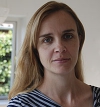
Alice Kerr-Wilson
Social Development Direct
Alice Kerr-Wilson is a senior social development specialist with over ten years’ experience in international development working on assignments for DFID and other donor agencies. A gender expert by background, she has led a wide range of assignments in this field including many gender equality audits and assessments to inform policy and programme development as well as participatory research and evaluation.
Dr. Lori Heise
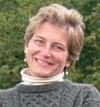
Dr. Lori Heise
London School of Hygiene and Tropical Medicine
Lori Heise is a senior lecturer at LSHTM, with 20 years’ experience in women’s health and HIV/ AIDS. She is an internationally recognised expert on the dimensions, causes and prevention of intimate partner violence and served on the core research team of the WHO Multi-country study on Women’s Health and Domestic Violence.
Dr. Emma Fulu
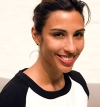
Dr. Emma Fulu
Independent Consultant
Dr. Emma Fulu is an independent consultant supporting the DFID-funded What Works to Prevent Violence Global Programme, particularly in the areas of research and policy uptake.
Professor Rachel Jewkes
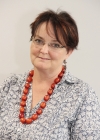
Professor Rachel Jewkes
South African Medical Research Council
Professor Rachel Jewkes is the Director of the What Works to Prevent Violence Global Programme, as well the Executive Scientist: Research Strategy in the SAMRC Office of the President and Secretary of the Sexual Violence Research Initiative. She is an Honorary Professor at the University of the Witwatersrand School of Public Health and a public health physician.