Evidence HubWhat Works Resources
- You are here:
-
Evidence Hub

- About
About (25)
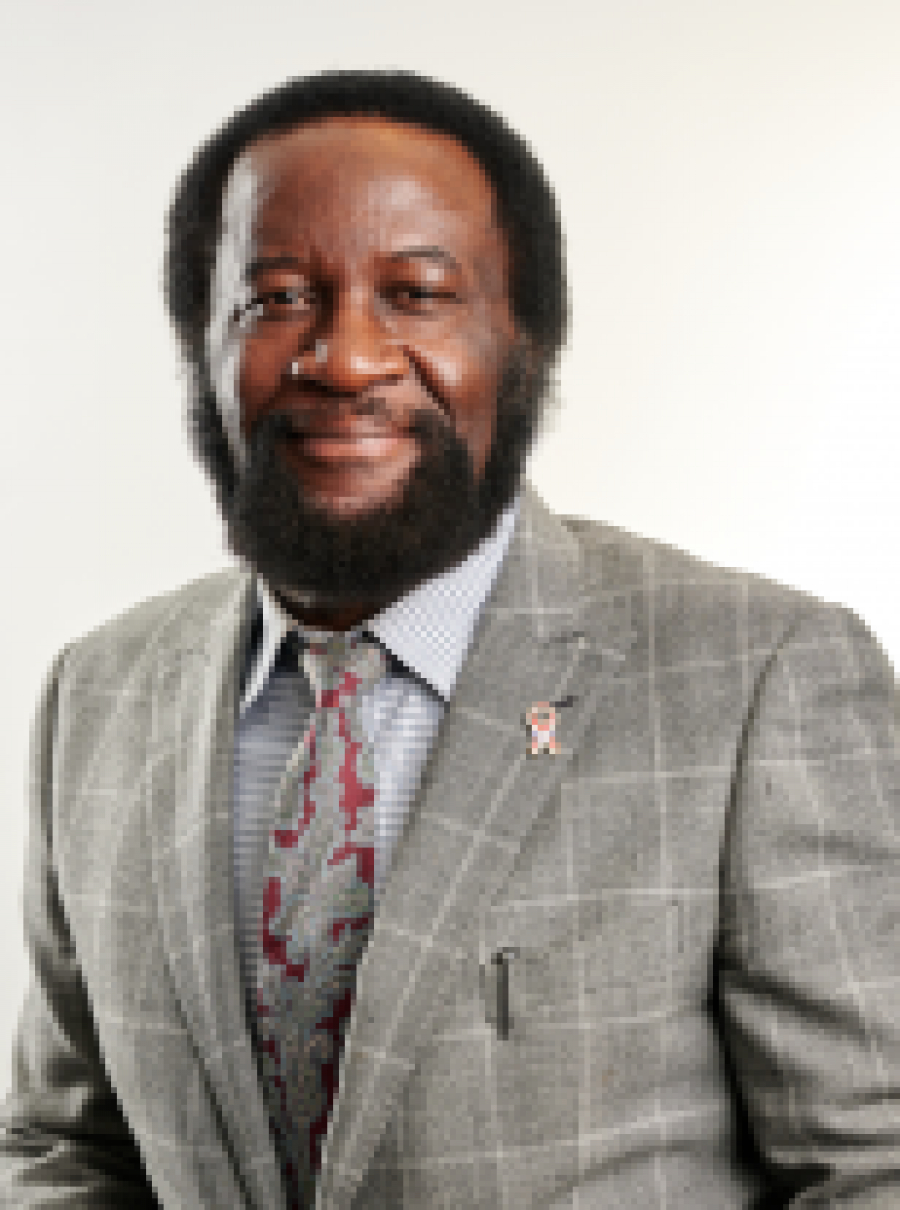
Michael Mbizvo
Senior Associate & Zambia Country Director
Michael Mbizvo is director of the Population Council’s office in Zambia and a senior associate in the Reproductive Health program. Mbizvo provides strategic direction and technical oversight to the Council’s research initiatives to advance reproductive health, including family planning services; HIV prevention, care, and services; gender-based violence and adolescent sexual and reproductive health programs and policies in Zambia.
 Since 2015 the What Works to Prevent Violence Against Women and Girls Programme has developed, adapted, and implemented 15 evidence-based VAWG prevention interventions across the Global Programme projects in Africa and Asia.
A significant part of the What Works mandate was to ensure these 15 interventions were evidence-based and implemented effectively. To this end DFID and What Works invested resources to support the development and/or adaptation of many of the interventions. All were implemented alongside rigorous evaluation research to test effectiveness.
To support effective implementation, the What Works programme assisted projects to ensure facilitators were well trained with ongoing support and able to deliver the intervention as intended. We also supported in-depth process monitoring of intervention delivery to deepen our understanding of challenges and successes. All the interventions have been rigorously evaluated, and results are available, and/or will be shortly – please peruse the website for information on this.
We are committed to the wide use of these resources as a contribution to preventing VAWG globally. To achieve this we have shared the interventions, either directly here, or by providing a link to where the curriculum/manual is hosted. We encourage everyone to review these manuals and if appropriate to your setting and context, to adapt and implement them, with the necessary acknowledgments.
Curricula
International Alert - Tajikistan
International Alert - Tajikistan
-
Zindagii Shoista – Living With Dignity: Workshop Manual Part 1

Part 1: Social empowerment
Zindagii Shoista is a workshop series designed to help promote harmony within families and reduce violence. By considering wider family dynamics when working with local communities, it aims to create a socio-economic environment that enables women to enjoy greater protection from sexual and gender-based violence, with a focus on violence against women and girls. -
Zindagii Shoista – Living With Dignity: Workshop Manual Part 2

Part 2: Enabling economic empowerment through income generating activities
Zindagii Shoista: Enabling economic empowerment (EE) through income generating activities (IGAs) is a workshop designed to promote families’ understanding of managing household budgets in order to strengthen household economies. Part 2 of the Zindagii Shoista manual, focusing on enabling EE through IGAs, complements the Zindagii Shoista intervention (Part 1) designed to promote gender equity and harmonious partner and family relationships, with the aim of reducing violence against women and girls in Tajikistan.


Kalliopi Mingeirou
UN Women
Kalliope is currently the acting Chief of the Ending Violence against Women Section at UN-Women in New York. She is also leading the work of the section in the area of prevention. She is a lawyer by training, holding an LL.M. on public international law. Before joining UN-Women, Kalliope worked as a practicing lawyer in Greece, and at international level, she worked for UN agencies, as well as international NGOs in the areas of human rights, women’s human rights and refugee protection in several countries, such as in the post-genocide Rwanda, Sweden, Burundi, Morocco, Bosnia Herzegovina, Liberia, Guinea and Ivory Coast.

Professor A K Shiva Kumar
Ashoka University & The Kennedy School of Government at Harvard University
A K Shiva Kumar (Shiv) is a development economist and evaluator who works on issues related to human development including poverty, health, nutrition, basic education, and the rights of women and children. He is Co-Chair of the Know Violence in Childhood – a global learning initiative that is synthesizing evidence to advocate for ending violence. He teaches economics and public policy as a visiting faculty member at Ashoka University, India and Harvard’s Kennedy School of Government. Shiv is an alumnus of Bangalore University and the Indian Institute of Management, Ahmedabad as well as Harvard University from where he did his Masters in Public Administration and Ph.D in Political Economy and Government.

Dr. Claudia Garcia-Moreno
World Health Organization (WHO)
Dr García-Moreno currently leads the team working on violence against women at the World Health Organization (WHO), which includes work on measurement and epidemiology, interventions research and development of guidelines and tools for the health sector. She has led the WHO’s work on gender and women’s health and on violence against women and until 2013 was coordinator of the Gender, Reproductive Rights, Sexual Health and Adolescence team in the Department of Reproductive Health and Research. She coordinated the WHO Multi-Country Study on Women’s Health and Domestic Violence against Women, and is a founder and coordinating group member of the Sexual Violence Research Initiative. She is currently co-chair of the FIGO Working Group on Gender-based Violence and chair of the Independent Advisory Board of the DFID-funded What works to prevent violence against women and girls initiative, and previously a member and chair of the Steering Committee of the Global Coalition on Women and AIDS. Dr García-Moreno is a physician from Mexico with an MSC in Community Medicine from the London School of Hygiene and Tropical Medicine. She has thirty years of experience in health care delivery, sexual and reproductive health, women’s health and gender in health research and policy, including in humanitarian settings.

Tina Musuya
The Center for Domestic Violence Prevention (CEDOVIP)
Tina is the Executive Director at The Center for Domestic Violence Prevention (CEDOVIP), and holds an MA in Sociology from Makerere University. Under her guidance, CEDOVIP won the 2010 UNAIDS Red Ribbon Award for innovative work in preventing violence against women and HIV and also successfully piloted the SASA! Programing in Kampala the site of the ground breaking SASA! study that brought to light evidence that preventing violence against women through social norm change is possible. She led a team of CEDOVIP’s colleagues to roll out community mobilization programs to prevent VAW in more than 13 districts in Uganda. She provided leadership for advocating for legislations on VAW i.e engaged in policy formulation at a local level (influenced the enactment of the first ever Domestic Violence bylaw in Uganda for Kawempe Division) and effectively participated in the drafting of the Domestic Violence Bill and spearheaded the Domestic Violence Bill coalition’s successful advocacy process for the Domestic Violence Act with civil society, policy makers, media and grassroots communities.
She brings 13 years of professional experience focused on VAW programme development and implementation. She has worked with diverse stakeholders, bilateral donor agencies, UN agencies, international and national NGOs, national consultants and leading academic institutions. Tina is a member of the Independent Advisory Board for the DFID-UK ‘What works to prevent violence against women and girls’ global program and a member of the Global Women’s Leadership Council. Tina participated in WithoutViolence Voices from the Field 2014 Fellowship to develop more effective solutions-oriented, evidence-based communications and advocacy strategies that can help broaden and deepen engagement with the issue of violence against children and women.

Markus Goldstein
World Bank
Markus Goldstein is a development economist with experience working in Sub-Saharan Africa, East Asia, and South Asia. He is currently a Lead Economist in the office of the Chief Economist for Africa at the World Bank, where he leads the Africa Gender Innovation Lab. His work centers on issues of gender and economic activity, focusing on agriculture and small scale enterprises. Markus has taught at the London School of Economics, the University of Ghana, Legon, and Georgetown University and published widely in academic journals and books. He holds a PhD from the University of California, Berkeley. Markus is a fellow of BREAD and a co-founder and regular contributor to the Development Impact blog.

In early 2016, I met a group of female sex workers (FSWs) in Bagalkot district in Karnataka, India. The campaign statement for their Orange Day event calling for an end to violence against women in December 2015 was “Violence is not love”. I was curious about what this meant because the women had framed it in the context of intimate relationships with their male partners.
Just a year earlier, the results of a formative study by researchers from the Karnataka Health Promotion Trust among 620 female sex workers (FSWs) in the same district had revealed that 51% of them faced emotional, physical or sexual abuse from their intimate partners. Almost half the FSWs reported humiliation, threat of harm or intimidation, 33% were either kicked, choked, burnt on purpose, forced to engage in humiliating sex acts or threatened with a weapon, and 7% were raped by their partners in the six months prior to the survey.
Tara, one of the FSWs I met, shared the story of a long raised scar on her right arm. On a Friday evening in August 2014, her partner came home to find her with a client. She defended herself when he accused her of cheating: “What will happen if I continue sex work? You don’t earn and give me money. How should I earn my livelihood? I need to eat. What do you expect me to do?” Seething with rage, he kicked and pinned her to the ground with his legs on her chest. The pocketknife meant to slit her neck instead slashed her arm raised in an act of self-protection. Writes Priya Pillai, Independent consultant and former lead - research uptake and partnerships at Strive. Read more of about this article published in the Guardian news here.
Stacey Scriver, Project Coordinator: Stacey.scriver@nuigalway.ie
Our Technical Advisory Group is comprised of global experts on gender equality, research methodologies, economics and costing studies, and research dissemination. They advise the research team and support us in research uptake.
- Chair: Prof Maria Floro, American University
- Dr. Aristides Alfredo Vara-Horno, San Martin de Porres University
- Dr. Quentin Wodon, World Bank
- Liz Ford, Guardian Global Development
- Dr. Anne Byrne, NUI Galway
- Dr. Kristen Dunkle, Emory University, Atlanta
More...
In each of our three research countries, a National Advisory Board has been established, made up of key national, provincial and local stakeholders. Members of the NABs will ensure that the research is adequately implemented in the local context, and they will carry out research dissemination to ensure that the research is used to advocate for change.
Pakistan
- Mrs. Mahtab Akbar Rashdi, Member of Provincial Assembly (PML-F)
- Ms. Khawar Mumtaz, Chairperson, National Commission on the Status of Women (NCSW)
- Dr. Yasmin Zaidi Ph.D, Director, Centre for Gender & Policy Studies
- Ms. Farhat Shaikh, Gender Advisor, CIDA-PSU
- Ms. Fauzia Viqar, Chairperson, Provincial Commission on the Status of Women, Punjab
- Mr. Niaz Ahmed Siddiqui, Inspector General of Sindh Police (Rt.)
- Ms. Kausar S. Khan, Associate Professor, Aga Khan University, Karachi
- Ms. Afiya S. Zia, Independent Gender Expert
- Dr. Aisha Ghaus-Pasha, Finance Minister, Province of Punjab
- Ms. Nazish Brohi, Social Sector Consultant
- Dr. Saba Gul Khattak, World Bank
- Katja Jobe (Senior Social Development Advisor /Team Leader Democracy & Accountability), DFID
Ghana
- Nana Oye Lithur, Honourable Minister of Gender, Children and Social Protection
- Fauzia Issaka, DfID
- Lynne Henderson, DfID
- Elizabeth Asante, ISSER
- ACP Habiba Twumasi-Sarpong, DoVVSU/ Police
- Felix Asante (observer), ISSER
- Dr. Lilian Anyete-Nyampong, CHRAJ
- Dr. Philomena Nyarko, GSS
- Anthony Amuzu, GSS
- Daniel Degbotse, Ministry of Health
- Ruth Grant, NETRIGHT
- Victoria Natsu, Ministry of Gender, Children and Social Protection
- William Mensah (observer), IPSOS Ghana
- Dr. Ama Pokuaa Fenny (observer), ISSER
- Hilary Gbedemah, The Law Institute
- Dr. Adolphina Addo-Lartey (observer), School of Public Health, UG
- Hon. John Alexander Ackon MoGCSP
- Patience Opoku, MoGCSP
- Abdul-Razak Unun, MoGCSP
- Efua Anyanful, MoGCSP
- Dorcas Coker-Appiah, Gender Studies and HRD Centre
- Annalise Caperella, UNICEF
- Vaonice Svati, UNICEF
South Sudan
- DFID South Sudan
- South Sudan Women’s Empowerment Network (SSWEN)
- EVE Organisation for Women Development
- Juba Teaching Hospital (JTH)
- UNICEF South Sudan
- UNFPA
The research in each country is facilitated and implemented by local institutions, experts in the national context as well as in research implementation.
 National University of Ireland Galway
The Centre for Global Women’s Studies at NUI Galway, part of the School of Sociology and Political Science, is committed to the development of gender-focused research across a range of issues and disciplines.
Principal Investigator
Dr. Nata Duvvury, Principal Investigator, Senior Lecturer/Director, Centre for Global Women’s Studies, National University of Ireland, Galway
NUI Galway Team Members
- Dr. Srinivas Raghavendra, Lecturer, School of Economics, NUI Galway
- Dr. Diarmuid O’Donovan, Senior Lecturer, School of Medicine, NUI Galway
- Dr. Stacey Scriver, Post-Doctoral Researcher and Project Coordinator, Global Women’s Studies, NUI Galway
- Ms. Sinead Ashe, Post-Doctoral Researcher and Project Coordinator, Global Women’s Studies, NUI Galway
- Ms. Carol Ballantine, PhD candidate, Global Women’s Studies, NUI Galway
- Mr. Muhammad Sabir, PhD candidate, Global Women’s Studies, NUI Galway
 Ipsos Mori
Ipsos is amongst the best known and most highly respected research organisations in the world, with a global presence across 86 countries. Each year Ipsos conducts research in more than 120 countries, working across national offices and with tried and tested local partners in-country. Ipsos is known for the quality of its research solutions and ability to offer first-class, robust and insightful findings.
Team Members, London Office
- Sara Grant-Vest, Director of International Social Research
- John Kennedy, Associate Director,
 International Center for Research On Women
The International Center for Research on Women (ICRW) is a private, non-profit organization with a mission to empower women, advance gender equality and fight poverty in the developing world. To accomplish this, ICRW works with partners worldwide to conduct empirical research, provide technical services, build capacity and advocate for evidence-based, practical ways to improve policies and programmes.
Team Members
- Dr. Gina Alvarado: Sociologist, Violence Rights and Inclusion
- Jennifer Mueller: Program Associate, Violence Rights and Inclusion
 Pakistan
Social Policy and Development Centre (SPDC)
Established in 1995, the Social Policy and Development Centre (SPDC), a non-profit research think tank, has made a significant intellectual contribution in placing issues of pro-poor growth and social development on Pakistan's policy-making agenda. SPDC focuses on four key areas for research and analysis: macroeconomy and public finance; poverty; gender; and governance. The Centre provides technical guidance to the government to adopt gender responsive budgeting at all levels.
Project Lead: Prof. Khalida Ghaus
 Ghana
The Institute of Statistical, Social and Economic Research (ISSER)
ISSER currently serves as the research wing under the College of Humanities, University of Ghana and engages in a number of policy relevant research whose findings are intended to help policy makers on the best policy decisions to make for national development. The Institute produces the annual State of the Ghanaian Economy report, as well as a series of peer-reviewed technical publications.
Project Lead: Prof Felix Asante
South Sudan
Dr. Khalifa Elmusharaf is a Senior Lecturer in Public Health at University of Limerick. He has more than fifteen years of experience as obstetrician, researcher, project manager, lecturer and health system specialist in academia, ministries of health, and International organizations. He is a consultant in public health, biostatistics, and research methods, with experience in community based initiatives, participatory ethnographic evaluation & research, innovative qualitative research, and community readiness assessment.
Project Lead: Dr. Khalifa Elmusharaf
This study will capture the economic and social impacts of violence against women and girls on individuals, households, communities and whole countries. It focuses on Pakistan, Ghana and South Sudan, but its findings will have relevance for all low and middle income countries, including those experiencing violent conflict. We are devising new tools to assess the impacts of violence on societies. Our research will provide strong evidence of the cost of inaction on VAWG, in order to inform policies and budgets of governments and businesses. At present, such evidence is lacking, particularly at the macro level, and in low and middle income countries.
Project description
The linkages between violence against women and girls and economic outcomes are relatively clear at the theoretical level; however, there is a lack of comprehensive estimates of the economic and social impacts of VAWG that can capture direct tangible, direct intangible and indirect tangible costs at the household, business, community and national level. Further, there is a need for more standardized guidance to measuring economic and social costs particularly in low and middle income countries. Through this project, we aim to fill these gaps. The project led by NUI Galway, in collaboration with Ipsos MORI and ICRW takes a multi-disciplinary, mixed methods approach that integrates quantitative and qualitative research with innovative economic analysis to derive social and economic costs of violence against women and girls (VAWG) in three fragile, conflict affected and/or low-middle income states. By guiding public policy, empirical research and evidence on the economic and social costs of VAWG will strengthen the argument for resources to implement laws, provide health and social support services and to mobilize communities to shift the social norms that underpin VAWG.
Rationale for costing studies
The primary objectives of this work is to generate knowledge and evidence on the economic and social costs of violence against women and girls to be used to inform policies and to advance the frontier in quantitative and qualitative research methods.
Strong evidence on the economic and social costs of violence against women is crucial to underscore the significant consequences of inaction. Evidence on the wide-ranging economic and social costs can influence governments, donors, NGOs and the private sector to increase investment, strengthen global and national policy and improve collaboration to address violence against women and girls.
There are an increasing number of studies that show that violence against women places significant burdens on individuals, governments and economies, including a 2003 report from the US Center for Disease Control and Prevention that estimates that the costs of intimate partner violence in the United States alone exceeded USD 5.8 billion per year while a more recent study conducted in Australia in 2009 by the National Council to Reduce Violence, in collaboration with KPMG, estimated that violence against women and their children cost the Australian economy an estimated $13.6 billion in that year alone. A number of developing and middle-income countries have also conducted costing exercises of violence, including Fiji, Macedonia, Uganda, Nicaragua and Chile, and Vietnam using various methodologies.
There is growing interest to estimate the socio-economic impact of violence against women in many parts of the world. In Fiji, a costing exercise completed by the University of the South Pacific (USP) concluded that family violence cost the government $498 million FJD in 2011 and in Vietnam a costing study on domestic violence against women estimated the loss of productivity, out-of-pocket expenditures, and foregone income for households came to about 3.19% of GDP.
Strong evidence on the economic and social costs of violence against women is crucial to underscore the significant consequences of inaction. Evidence on the wide-ranging economic and social costs can influence governments, donors, NGOs and the private sector to increase investment, strengthen global and national policy and improve collaboration to address violence against women and girls.