Evidence HubWhat Works Resources
- You are here:
-
Evidence Hub

- What Works

What Works
Zindagii Shoista – Living With Dignity: Workshop Manual Part 1

Part 1: Social empowerment
Zindagii Shoista is a workshop series designed to help promote harmony within families and reduce violence. By considering wider family dynamics when working with local communities, it aims to create a socio-economic environment that enables women to enjoy greater protection from sexual and gender-based violence, with a focus on violence against women and girls.
Right to Play - Preventing violence among and against children in schools in Hyderabad, Pakistan

Right to Play Pakistan designed and implemented a school-based programme that used sport and play to reduce peer violence and corporal punishment, improve mental health, and change social norms in support of gender equality and non-violence. The programme reached 8,000 children in 40 public schools, with an equal number of boys and girls benefitting. It was rigorously evaluated by Aga Khan University.
This Evidence Brief presents the findings from the end-line evaluation. These show significant reductions in both boys’ and girls’ perpetration and victimisation of peer violence, experience of corporal punishment both at home and in school, and witnessing of acts of domestic violence. Levels of depression and patriarchal gender attitudes have also improved. The positive results demonstrate the potential of investing in sports and play based learning in schools and communities to prevent violence.
Intersections of violence against women and girls with state-building and peace-building: Lessons from Nepal, Sierra Leone and South Sudan

This study draws on three case countries – Nepal, Sierra Leone and South Sudan – to address gaps in evidence and understanding on violence against women and girls (VAWG) during post-conflict transition. It highlights the potential for state-building and peacebuilding processes to address VAWG, and the effect this has in advancing sustainable peace.
This is the first time that a systematic approach has been taken to bridge the gap between VAWG and post-conflict state-building / peace-building policies and processes. The study was led by the George Washington Institute (GWI), CARE International UK and International Rescue Committee (IRC).
Intersections of violence against women and girls with state-building and peace-building: Lessons from Nepal, Sierra Leone and South Sudan - Policy Brief

This study draws on three case countries – Nepal, Sierra Leone and South Sudan – to address gaps in evidence and understanding on violence against women and girls (VAWG) during post-conflict transition. It highlights the potential for state-building and peacebuilding processes to address VAWG, and the effect this has in advancing sustainable peace.
This is the first time that a systematic approach has been taken to bridge the gap between VAWG and post-conflict state-building / peace-building policies and processes. The study was led by the George Washington Institute (GWI), CARE International UK and International Rescue Committee (IRC).
This policy brief summarises findings from the study for policy makers.
A new analytical framework for addressing the intersections of violence against women and girls with post-conflict statebuilding and peace-building processes

This study draws on three case countries – Nepal, Sierra Leone and South Sudan – to address gaps in evidence and understanding on violence against women and girls (VAWG) during post-conflict transition. It highlights the potential for state-building and peacebuilding processes to address VAWG, and the effect this has in advancing sustainable peace.
This is the first time that a systematic approach has been taken to bridge the gap between VAWG and post-conflict state-building / peace-building policies and processes. The study was led by the George Washington Institute (GWI), CARE International UK and International Rescue Committee (IRC).
This policy brief includes an analytical framework, which is a practical tool that can be used by policy makers as a guide to designing fair, inclusive, and sustainable state-building and peace-building processes that include meaningful engagement with the issue of violence and women and girls.
What Works to Prevent Violence Against Children in Hyderabad, Pakistan

Indashyikirwa - Women’s SAFE SPACES for IPV in Rwanda

The Indashyikirwa programme in Rwanda was funded by the UK department for International Development and implemented over four years (2014-2018) by CARE Rwanda International, Rwanda Men’s Resource Centre, and Rwanda Women’s Network, in Eastern, Western and Northern provinces of rural Rwanda. The programme aimed to reduce IPV, shift social norms and attitudes condoning violence, and provide more empowering responses to survivors. One of the components of the programme involved the establishment of women’s safe spaces, where women and men could disclose and discuss IPV, and be referred or accompanied to health, justice and social services.
This evidence brief reveals that the creation of safe spaces helped facilitate the disclosure of IPV, enhanced knowledge and awareness of more gender equitable norms, offered opportunities for collective solidarity and livelihoods skills training, and improved the quality of and linkages to formal services.
A pioneer research in Pakistan has showed a very clear pattern of behavioural change when early intervention is made on young minds.
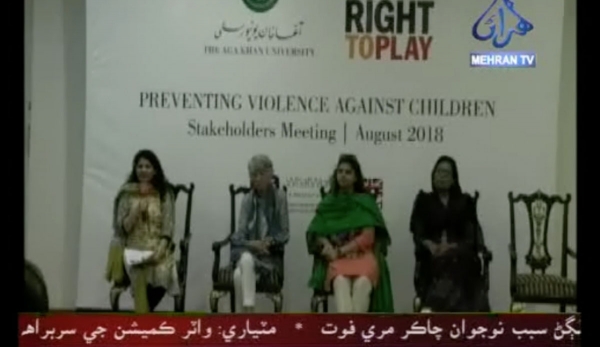
A dissemination meeting with stakeholders of the project tilted ‘What works to prevent violence among and against children’ was held in Hyderabad on August 8, in which three years of research was presented involving 8,000 students of grades 6th to 8th from 40 public schools selected for the study.