Evidence HubWhat Works Resources
- You are here:
-
Evidence Hub

- What Works

What Works
EVENT: Violence, uncertainty, and resilience among refugee women and community workers - London
An evaluation of gender-based violence case management services in the Dadaab refugee camps
Friday, 23 February 2018
10.30am–12.00pm (lunch reception to follow)
The Exhibition Room, The Goldsmiths’ Centre, 42 Britton Street, Clerkenwell, London, EC1M 5AD
Confirmed speakers:
Professor Charlotte Watts, Chief Scientific Adviser, Department of International Development
Dr Mazeda Hossain, Assistant Professor, London School of Hygiene & Tropical Medicine
Dr Chimaraoke Izugbara, Head, Population Dynamics and Sexual and Reproductive Health, African Population and Health Research Center
Sophia Wanjiku, Technical Adviser, International Rescue Committee
Fred Wanyonyi Wafula, Senior Gender Officer, CARE International Kenya
Please RSVP before 19 February 2018 to Sam.Underwood@rescue.org
EVENT: Violence, uncertainty, and resilience among refugee women and community workers - Dadaab
An evaluation of gender-based violence case management services in the Dadaab refugee camps
Thursday, 1 March 2018
8.30–10.30 am
Ban Ki Moon Hall, UNHCR DMO, Dadaab
Confirmed speakers:
Dr Mazeda Hossain, Assistant Professor, London School of Hygiene & Tropical Medicine
Ms Sheru Wanyua Muuo, Research Officer, African Population and Health Research Center
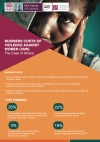
What Works to prevent Violence against women and girls (Component 3) is conducting research to understand the costs of VAWG to businesses.
Read the exciting policy brief here...

This study presents the results of the formative research phase of a larger project that was funded by the UK Department for International Development (DFID) and that was supported by the ‘What Works’ consortium to prevent violence against women and girls (VAWG). This project titled: “Utilising Innovative Media to End Violence against Women and Girls Through community Education and Outreach” was undertaken in the occupied Palestinian territories (oPt). It was implemented by Ma’an Network in strategic collaboration with 16 local partner non-governmental organisations (NGOs) in the oPt. It focuses on all areas of the West Bank and Gaza. The formative research was carried out by the Arab World for Research and Development (AWRAD)…
Working Paper No.4 - South Sudan: The Economic and Social Impact of Violence Against Women and Girls (VAWG)

Authors: Ballantine, C., Fenny, A., Asante, F. and Duvvury, N.1
South Sudan is a country devastated by war. Since the end of colonial rule, there have been few years when the country has not been affected by conflict. Against this backdrop, the population has largely held to traditional values and close family ties. The world’s newest independent country, it is dominated by strong traditions and low levels of Western-style development. South Sudan shares land borders with 6 countries, making its stability a concern across the Horn of Africa (Frontier Economics et al. 2015). Even as war and conflict persist, so too does daily life, although the social and economic life of the country have been profoundly eroded by constant conflicts. The basis of South Sudan’s development has been, and will remain, its population. The wellbeing and status of women is a fundamental part of this.
Spousal Violence causing significant rise in depression amongst female garment workers in Bangladesh, reveals new research
Spousal Violence (SV) is high in Bangladesh, new research reveals even higher rates amongst female garment workers and of those, 40% report symptoms of depression
Dhaka, Monday 15 January 2018 — Intimate Partner Violence (IPV) is high in Bangladesh (27% during the last 12 months), new study reveals even higher rates, almost double, amongst female garment workers (53%)and of those 40% are reporting symptoms of depression. The UK aid-funded research released today by the icddr,b and BSR’s HERproject reveal business can play a leading role in preventing and addressing IPV, by leveraging the workplace as platforms of positive social change.
Almost 60%1 of female garment workers in Bangladesh have experienced some form of physical or verbal violence at work. The use of violence is normalized as a disciplinary measure for workers because of the hierarchal structure of a garment factory, the high-pressure environment based on meeting production targets, and the social standing of women, particularly of young, migrant female workers. Women’s financial empowerment also has mixed effects on women’s vulnerability to SV. In some situations, women’s financial empowerment can serve to protect them against IPV, in others, where women are not supposed to be financially strong, it can have the opposite effect. Thus, a worker’s savings higher than BDT 50,000 increased her vulnerability to SV several times (three times to physical SV and two times to sexual and economic SV).
Dr. Ruchira Tabassum Naved from icddr,b notes that approximately 40% of the garment workers who reported SV had depressive symptoms. SV contributed to depression through increased workplace violence, work related stress; and reduced general health, self-esteem and life satisfaction. Workplace violence contributed to depression both directly and through increased work related stress; and reduced general health and life satisfaction.
Until now, the effects of SV and workplace violence on female garment workers’ mental health had not been studied in Bangladesh and the pathways through which experience of SV and workplace violence lead to development of depressive symptomatology have remained relatively unknown. This research redresses this gap in the literature using data from a cross sectional survey of female garment workers (n=800) conducted as baseline survey, which evaluates whether a factory wide intervention, HERrespect, can reduce female garment workers' experiences of SV, and experience and/or witnessing of violence in the workplace. The quasi-experimental study involves four intervention and four control factories.
Thus, the rate of SV, work place violence and depressive symptomatology is high among female garment workers. As previously found, the experience of violence has an adverse impact on women’s mental health, whether it is SV or work place violence. The results of the research show that any experience of violence, be it SV and/or workplace violence increases work-related stress which in turn leads to the development of depression which in many cases, reduces productivity. Thus, violence incurs cost at individual, family and the garment sector levels. The findings suggest that programmes to reduce SV and workplace violence and to promote gender sensitivity would improve women’s mental health through enhanced self-esteem and life satisfaction and productivity.
“Business can indeed play a leading role in preventing and addressing SV,” says Marat Yu, Manager, HERproject, “by leveraging the workplace as engines of positive social change. The workplace is a powerful space to shape attitudes and behaviours, as well as create positive role models. Workers – men and women – will be less willing to accept violence at home and in communities if they work in a respectful environment.”
The project; Measuring the Effect of HERrespect: An Intervention Addressing Violence against Female Garment Workers in Four Factories of Bangladesh, is funded by UK aid from the UK government, via the What Works to Prevent Violence Against Women and Girls Global Programme The funds are managed by the South African Medical Research Council.HERrespect is a 12-month workplace intervention piloted in four ready-made garment factories in Bangladesh aimed at supporting the prevention of workplace and intimate partner violence.
[1] https://www.fairwear.org/wp-content/uploads/2016/06/StandingFirmReportFWF2013.pdf
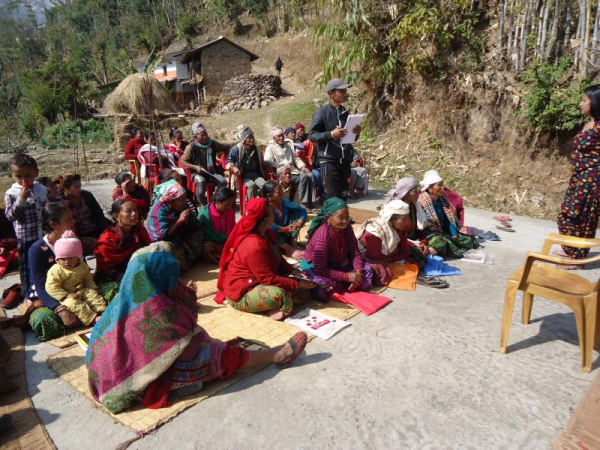
In Nepal, violence against women is reaching epidemic proportions. A recent national survey by the Nepali government showed a staggering 48% of women had experienced some form of gender-based violence (GBV) at some point in their lifetime, and over a quarter had experienced GBV in the past 12 months. Geeta Pradhan, VSO’s head of programming for gender and inclusive governance in Nepal, believes that although violence in Nepal is ‘endemic’, it often goes ‘unrecognised and underreported’ - read full article on VSO International website here...
The Spotlight Initiative
Thursday 11 January 2018
UN Women are inviting people to attend a civil society virtual consultation for both the East and Southern Africa + Central and West Africa region on the Spotlight Initiative, a new global initiative by the European Union (EU) and the United Nations (UN) aimed at eliminating violence against women and girls. The consultation will take place on Thursday, 11 January 2018 between 8.30 and 10 a.m. Eastern Standard time.
At a time when women’s rights, integrity and safety are still being persistently violated across the globe, the EU and the UN are partnering to initiate a joint multi-donor trust fund intended to combat the global scourge of violence against women and girls and highlight the role of gender equality as a driver for the achievement of all 17 Sustainable Development Goals. The Initiative will have the EU as its initial contributor with an initial investment in the order of EUR 500 million. It will initially cover five regions (Asia, the Pacific, Africa, Latin America and the Caribbean) and have five focus areas - trafficking and sexual and economic (labour) exploitation, domestic violence, sexual and gender-based violence and harmful practices, femicide, and domestic and family violence.
Women’s rights organisations have long been at the forefront of the fight to eliminate violence against women and girls. They are invaluable partners and resources, bring critical networks, existing and contextual good practices and a wealth of knowledge, expertise and experience. While significant progress has been made, much remains to be done. In this regard, the Spotlight Initiative will work closely with women's rights organisations to solidify gains and build on and complement existing mechanisms and programmes, including those within the UN, EU and with other partners.
The objective of these regional consultations are twofold -- to present the Spotlight Initiative and describe the work done thus far as well as next steps and to gather inputs and recommendations on the regional context and focus areas, including on experiences of good programmes and practices, key challenges and interlinkages between different forms of violence. The focus area for Africa is sexual and gender-based violence and harmful practices. The consultation will be held in English.
Connection details for the East and Southern Africa region consultation:
JOIN WEBEX MEETING | https://unwomen.webex.com/unwomen/j.php?MTID=mf124801b16237a5f5ffedd0e49893317 - Meeting number (access code): 649 703 913 Host key: 269769
JOIN FROM A VIDEO SYSTEM OR APPLICATION | Dial sip:649703913@unwomen.webex.com - You can also dial 173.243.2.68 and enter your meeting number.
JOIN BY PHONE | 1-240-454-0879 USA Toll
Connection details for the Central and West Africa region consultation:
JOIN WEBEX MEETING | https://unwomen.webex.com/unwomen/j.php?MTID=m44c2c37f6aedc2ef6b69b7c76373cde1 - Meeting number (access code): 643 461 894
JOIN FROM A VIDEO SYSTEM OR APPLICATION | Dial sip:643461894@unwomen.webex.com - You can also dial 173.243.2.68 and enter your meeting number.
JOIN BY PHONE | 1-240-454-0879 USA Toll
To RSVP and/or for questions or clarifications, please contact sonya.thimmaiah@unwomen.org or sharafi@unfpa.org.
Social Norms Evidence Brief

What do we mean by social norms?
Violence against women and girls (VAWG) is a pervasive social problem across the globe, but varies in prevalence and severity. The 2013 mapping of the Global Burden of Disease showed the prevalence of physical and sexual VAWG differed between countries, and between ethnic groups and social classes within countries. Two central, and overlapping, sets of ideas and practices driving VAWG are those related to gender relations and those on the use of violence.