Evidence HubWhat Works Resources
- You are here:
-
Evidence Hub

- What Works

What Works
Ujamaa NGO Implementation brief

“ We never report when boys touch our private parts at school because we shall be punished by our teacher, and I am very scared of telling my parent.”
Ujamaa-‐Africa: Addressing Violence against Girls through a school based intervention in informal settlements in Nairobi.
Tearfund - Le pouvoir du chef religieux dans la lutte contre la violence à l'égard des femmes et des filles (VFF)

03 juillet 2018
Mon nom est Uwezo BAGHUMA. Ces trois dernières années, je travaille sur un projet qui étudie le rôle des chefs religieux, compte tenu de leur influence et stature au sein de leur communauté.
Tearfund - Tales of Transformation

On the power of the faith leader in the fight against harmful behaviour, which supports violence against women and girls (VAWG)
July 03, 2018
My name is UWEZO BAGHUMA LELE, and for last three years I have been working on a project, which looks at the roles religious leaders play in the fight against VAWG, given their influence and standing in the local community.
Two tales about the power of play, Pakistan

She knows now that she is something… she values herself
12-year-old Mahnoor – clad in a simple blue and white uniform with the usual head-scarf -skipped home happily after a regular day at school in Hyderabad, Pakistan. With mundane thoughts of school and homework on her mind, she did not focus on the shadow closing in behind her. It was only when a rough hand grabbed her from behind the neck dragging her towards a deserted, dead-ended alley, does Mahnoor realize that she is being assaulted. Realizing the stranger’s ill-intent, Mahnoor snapped out of her reverie, and fought back. Kicking, biting, screaming – she continued her struggle eventually managing to break free from her assailant, and sprint home.
From hopelessness to happiness: The reflection sessions that changed a narrative in Rwanda

Rachel Kwizera CARE Rwanda
Indashyikirwa (Agents for Change) is an intimate partner violence (IPV) prevention project being implemented across seven Districts in the Western, Northern and Eastern provinces of Rwanda. The programme targets both partners of couples through a series of reflection sessions that challenge causes of gender based violence (GBV) and promote equality.
Ndabaruta Beatrice and Ndayambaje Godefroid are one of the couples that were selected to be a part of the five-month, weekly curriculum.
Beatrice spoke about the difference in her life and relationship before and after participating in the curriculum: “When we got married we didn’t own much, but as time went on, it got worse. We barely had any food in the home because even the little earnings we had my husband spent on alcohol. He always came home late and drunk and he often kicked the door open while hurling insults at me and the children. I became such a miserable person to the extent that I didn’t care whether I took a bath or not, I was not even bothered about body hygiene. I lived in that hopeless situation for seven years”.


This report presents the evaluation results of a project to curb levels of VAWG in rural Tajikistan, where around 60 per cent of women experience sexual, physical and emotional violence. Baseline research found that drivers include gender norms, social pressure, poverty, food insecurity, mental health issues, and alcohol and substance abuse. The project worked with 80 families across four villages, running weekly sessions to improve behaviours, relationships and communication, and also strengthening , livelihoods and financial management skills. Grants were given, in the form of livestock and equipment, to aid income generating activities, and the report outlines the success in reducing violence and making relationships stronger and more equitable.
‘The good rain is the rain which falls repeatedly’

Indashyikirwa is a multi-collaborator programme to prevent intimate partner violence prevention (IPV), across rural Rwanda. It is being implemented by CARE Rwanda, Rwanda Women’s Network (RWN) and Rwanda Men’s Resource Centre (RWAMREC). A critical component of the programme is the creation of women’s safe spaces dedicated to offering informal support to survivors of IPV, including a pathway for referral to formal services (i.e., health, criminal justice and social services). Drawing on their experience implementing the Polyclinics of Hope since 1997, the RWN established14 safe spaces, designed to address the health, psychosocial, and socio-economic needs of gender based violence (GBV) survivors. At each women’s safe space, 22 facilitators were recruited from the communities engaged in the programme and trained to offer dedicated support to women and men that report IPV, educate women about their rights, and refer or accompany individuals who wish to report abuse or seek health or social services.
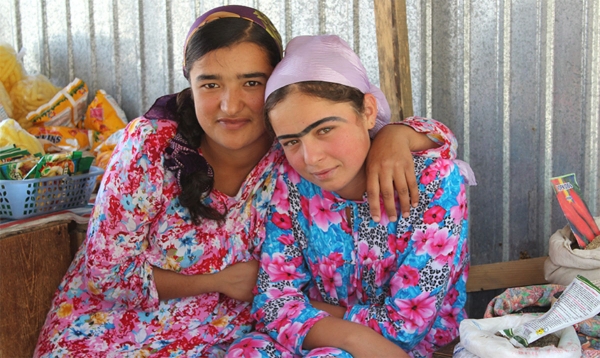
Violence against women is perpetrated in order to sustain patriarchal power relations. Projects to prevent violence, through economic empowerment, must remember this.
I first met Farzona a couple of years ago, when she joined a violence prevention project that I have been working on. In her mid-30s at the time, she suffered from severe headaches and anxiety after years of domestic abuse and malnutrition.

Read about an ordinary day for an extraordinary woman living in one of the world’s largest refugee camps.
February 26, 2018
My name is Miriam. I was born in Somalia. My family fled the war in 1992 when I was one year old, and I have lived in Dadaab refugee camp—one of the largest in the world—since then.
Now, I work for the International Rescue Committee. Every day, I work to protect women and girls from violence.