Evidence HubWhat Works Resources
- You are here:
-
Evidence Hub

- What Works

What Works
What Works hosted a public learning event at the London School of Hygiene & Tropical Medicine (LSHTM) during #16Days2017

What Works hosted a public learning event at the London School of Hygiene & Tropical Medicine on Wednesday 6 December 2017 . As part of the 16 Days of Activism campaign, Dr Giulia Ferrari (LSHTM) welcomed the participants . The event was chaired by Ms. Alice Kerr-Wilson (Social Development Direct). Following an opening by DFID UK's Emily Esplen, Social Development Adviser Violence Against Women and Girls Inclusive Societies Department, Policy Division, Dr. Rachel Jewkes presented the findings related to drivers of violence against women and girls from the research conducted. The second session was chaired by Tim Hess (IRC), which included presentations from Dr Mary Ellsberg on findings from the South Sudan study, Pamela Tuiyott on IRC’s experiences from the field in South Sudan, Francesca Quirke of Tearfund on the significance of faith and GBV in the DRC, and Dr Mazeda Hossain on findings from the What Works Dadaab study.The final panel provided valuable take away messages highlighting implications of the research for policy and practice for VAWG prevention from the panelists: Dr Mary Ellsberg; Prof Rachel Jewkes, Ms Carron Mann and Dr Mazeda Hossain . The learning event was attended by about 100 people in person and almost as many via the live online link, to watch again please visit: https://panopto.lshtm.ac.uk/Panopto/Pages/Viewer.aspx?id=6e5f68f0-44d0-498f-8b98-c95ae1938e31
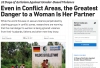
An article in NewsDeeply’s Women and Girls site on violence against women and girls in the DRC, features interview with Tearfund’s Maggie Sandliands in relation to their recent survey of more than 700 people in conflict-affected Ituri province, northeastern DRC, which revealed that the most prevalent form of violence reported in the region was intimate partner violence, with 68.8 percent of women experiencing some form of it in the past 12 months. Read the full article here
What are the Drivers of Violence Against Women and Girls and What Works to Prevent it?

This presentation, given by Professor Rachel Jewkes, Executive Scientist in the office of the President, South African Medical Research Council and Consortium Director, What Works Global Programme, examines different types of IPV, and assesses the relative importance of key driving factors, including poverty, food insecurity, social norms regarding both gender and the use of violence, and disability. The presentation outlines tasks to combat IPV and illustrates the beneficial effects of economic empowerment and gender empowerment, and of changing social norms.
What Works to Prevent Violence Against Women and Girls - Implications for the field IRC South Sudan

Women and girls in South Sudan continue to be at a heightened risk of VAWG including conflict related sexual violence, both in protection camps and in their homes. This presentation outlines IRC programmes dedicated to VAWG prevention and recommendations for how best to expand upon the work taking place.
#16 days - No Safe Place: A Lifetime of Violence for Conflict-Affected Women and Girls in South Sudan

What are the forms, trends and prevalence of different forms of violence against women and girls (VAWG) in South Sudan? What are the direct and indirect drivers of VAWG, and how are they influenced by the different conflicts that have taken place in South Sudan? Based on a household survey of 2244 women and 481 men, and in-depth Interviews with over 500 key stakeholders, survivors and community members, this presentation looks at the prevalence of sexual assaults by non-partners, and physical and sexual violence by intimate partners, and examines the extent to which these are influenced by experience of conflict. The presentation concludes with a series of recommendations to tackle the issues raised.
Zindagii Shoista – Living With Dignity

This presentation, given by Henri Myrttinen, International Alert, looks at the ongoing work of a three-year project taking place in four villages in two districts of Tajikistan, featuring 271 beneficiaries. The ethnic Tajik and Uzbek villages are all affected by circular out-migration. Findings indicate among the highest levels of VAWG in the What Works consortium, caused in part by male labour migration (Russia, less to Kazakhstan), structural food insecurity (esp. women), low income levels, very high levels of economic precarity and living on debt, and substance abuse.
The CHANGE INTERVENTION - Working with Couples to Prevent Intimate Partner Violence in Nepal

This presentation is an assessment of the approach, tools, challenges and successes of the Change intervention by Equal Access in Nepal. Changes noticed included increased communication between couples, joint decision-making, sharing of household chores, and participants learning to speak out against IPV and VAWG.
VAWG in Conflict and Humanitarian settings: Does Faith Matter? Findings from the DRC

A household survey taken in Ituri, DRC, reveals shocking levels of IPV and sexual violence. This presentation looks at the benefits of engaging with faith groups to prevent violence in conflict-affected communities. It assesses the reach and influence of faith groups and leaders, and how they have the capacity to change gender attitude. This is facilitated by training faith leaders and gender champions, and a programme of community dialogues.

This presentation assesses the aims and efficacy of a programme seeking to foster change in knowledge, attitudes skills and behaviour to promote non-violent relationships. This involves creating enabling environments through training and supporting opinion leaders and promoting women’s safe spaces. It assesses the lessons learned from working with couples and from the women’s safe spaces.