Evidence HubWhat Works Resources
- You are here:
-
Evidence Hub

- What Works

What Works
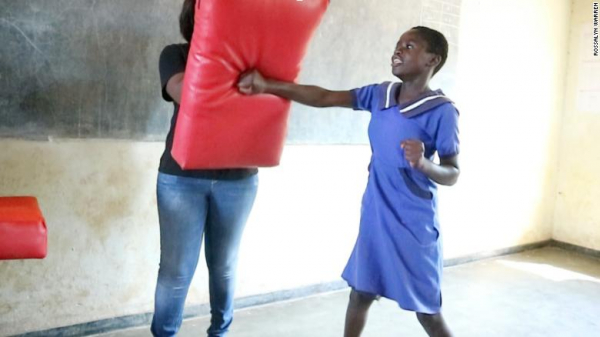
Editor's Note: CNN is committed to covering gender inequality wherever it occurs in the world. This story is part of As Equals, a year-long series.


An evaluation of gender-based violence case management services in the Dadaab refugee camps In the Dadaab refugee camps in north-eastern Kenya, the International Rescue Committee (IRC) and CARE International (CARE) have implemented programmes that aim to both respond to and prevent GBV. A cornerstone of this work has been to train refugees, known as refugee community workers, to deliver aspects of GBV prevention and response work in order to develop a broader implementation of traditional GBV outreach, community mobilisation, and case management. Between 2014 and 2017, research co-led by the London School of Hygiene and Tropical Medicine (LSHTM) and the African Population and Health Research Centre (APHRC), in collaboration with IRC and CARE, was conducted to assess this model and better understand its feasibility, acceptability, and influence among female survivors of GBV accessing care. This report presents the findings of that research.

An evaluation of gender-based violence case management services in the Dadaab refugee camps
In the Dadaab refugee camps in north-eastern Kenya, the International Rescue Committee (IRC) and CARE International (CARE) have implemented programmes that aim to both respond to and prevent GBV. A cornerstone of this work has been to train refugees, known as refugee community workers, to deliver aspects of GBV prevention and response work in order to develop a broader implementation of traditional GBV outreach, community mobilisation, and case management.
Between 2014 and 2017, research co-led by the London School of Hygiene and Tropical Medicine (LSHTM) and the African Population and Health Research Centre (APHRC), in collaboration with IRC and CARE, was conducted to assess this model and better understand its feasibility, acceptability, and influence among female survivors of GBV accessing care. This report presents the findings of that research.

An assessment of the economic and social impact of VAWG in Ghana, including details of the sample size and methodology involved. Findings point to VAWG resulting in a diminished sense of safety in the community, a reduction in social cohesion, and losses for women’s leadership, leading to negative implications for women and their communities.
Right to Play - Who we are and What we do

Right to Play is a global organisation that uses transformative power of sport and play to educate and empower youth. This report indicated the importance of their work in Pakistan (143rd of 144 in the Gender Inequality Index) and outlines how a program of sports and play in Hyderabad is helping to prevent VAWG. Featuring a look at the activities, outreach and scope of the program, and its expected outcomes.
What Works to Prevent Violence Against Women and Girls: An Overview

An overview of the work of What Works, including a look at the scale of the problem, the different manifestations of VAWG, its causes, and the role of food insecurity, gender attitudes, disability, and violence against children.
Zindagii Shoista – Living With Dignity: Preventing Violence against Women and Girls in Tajikistan

Details of a three-year project currently running across four villages in two districts of rural Tajikistan. The project is working with family units, addressing IPV and domestic violence, and also the impact of disability in experiences of VAWG. Includes research findings and the impact of the intervention.
Preventing Peer Violence Against Children: Baseline Data of a Cluster Randomized Controlled Trial in Pakistan

Is Right to Play effective in reducing peer victimisation in Pakistan and also in improving attitudes towards gender roles, and improving youth mental health and school performance? This informative brief includes methodology, findings regarding the relationship between disability and violence, and also the intersection of corporal punishment by teachers and peer violence, and makes policy recommendations.
EVENT: Violence, uncertainty, and resilience among refugee women and community workers - Nairobi
An evaluation of gender-based violence case management services in the Dadaab refugee camps
Tuesday, 27 February 2018
10.00am–12.00pm (lunch reception to follow)
Doubletree by Hilton (formerly Amber Hotel), Ngong Lane, off Ngong Road, Nairobi
Confirmed speakers:
Dr Chi-Chi Undie, Senior Associate, Population Council
Dr Mazeda Hossain, Assistant Professor, London School of Hygiene & Tropical Medicine
Dr Chimaraoke Izugbara, Head, Population Dynamics and Sexual and Reproductive Health, African Population and Health Research Center
Mercy Lwambi, Technical Coordinator, International Rescue Committee
Fred Wanyonyi Wafula, Senior Gender Officer, Care International Kenya
Please RSVP before 20 February 2018 Sam.Underwood@rescue.org